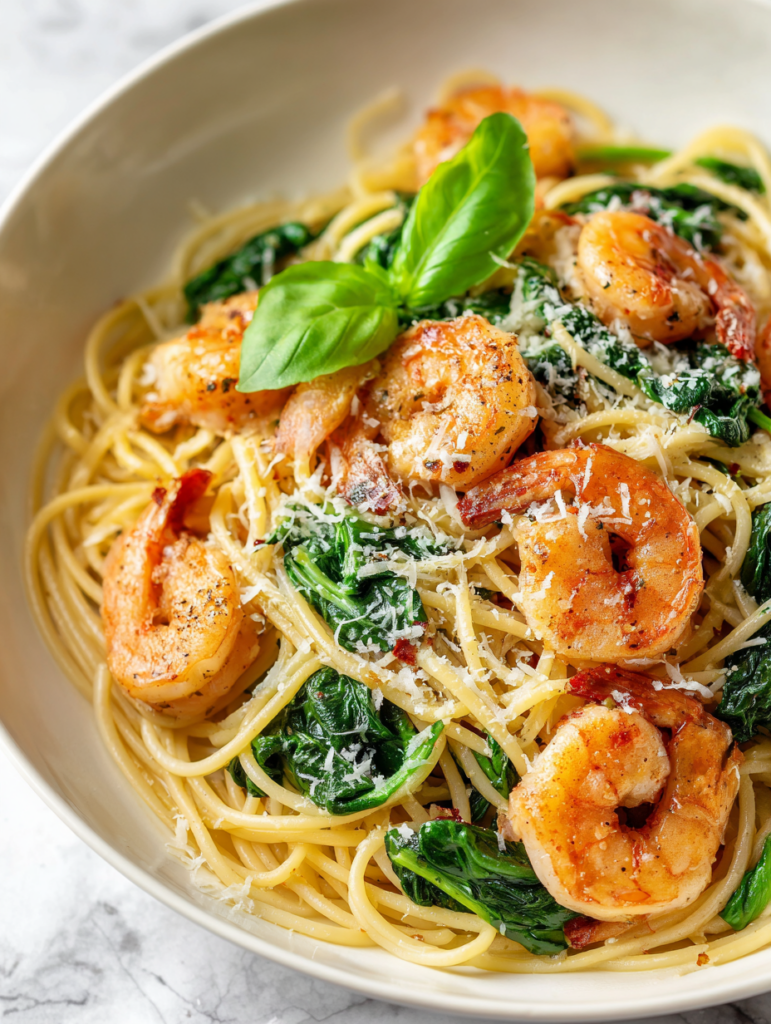
This shrimp spinach pasta isn’t about complicated sauces or fancy ingredients. It’s about how a handful of simple, everyday items can surprise you with their potential when treated right. Shrimp’s sweet, firm bite contrasts beautifully with the tender, slightly wilted spinach, making each forkful a little celebration of texture.
I fell into this recipe on a busy weeknight when I needed something quick but satisfying. The magic comes from just a few minutes of sautéing, letting the flavors develop without fuss. It’s honest cooking, the kind that feels like a small victory in the chaos of daily life, turning humble ingredients into a dish that’s both comforting and fresh.
Focusing on the overlooked beauty of combining simple ingredients like shrimp and spinach, this recipe highlights how their contrasting textures and flavors can create a surprisingly satisfying dish. It’s about appreciating the everyday elegance of quick, honest cooking that transforms humble pantry staples into something memorable.
Celebrating Simplicity with Shrimp and Spinach
- Cooking this dish feels like a quiet victory after a long day, the aroma of garlic and shrimp filling the kitchen.
- I love how a handful of fresh spinach wilts just enough to add a vibrant green pop without losing its tender bite.
- There’s a nostalgic joy in the simplicity—reminds me of family dinners around a cluttered table, everyone savoring straightforward food.
- Sometimes, I get so proud when I toss everything together and it turns out perfectly—bright, fresh, and just enough richness.
- This recipe always feels like a small act of self-care, turning humble ingredients into something that feels genuinely special.
The story behind this recipe
- This dish came together during a hectic week when I needed something quick, honest, and satisfying. I remember the moment I added that squeeze of lemon—suddenly, everything brightened, and I realized how simple ingredients could deliver a punch of flavor if treated with care.
- It’s not a fancy recipe, but it’s reliable. The kind of meal that reminds me cooking doesn’t have to be complicated to feel special. Every time I make it, I think about how comforting it is to transform everyday pantry staples into something memorable, even on the busiest nights.
- heading
- The story behind this recipe
Trivia and Historical Roots
- This dish draws inspiration from the quick, vibrant pasta recipes of the Mediterranean coast, where fresh seafood and greens are staples.
- Shrimp and spinach pairing has roots in Italian cucina semplice, emphasizing how humble ingredients can shine together without fuss.
- Historically, pasta dishes with seafood became popular in coastal regions where fresh catch was abundant and cooking needed to be fast and flavorful.
Key ingredients and tips
- Shrimp: I prefer deveined, tail-on shrimp for easy peeling and a better presentation. Their sweet, briny aroma really perks up the dish. Try adding a pinch of smoked paprika for a subtle smoky kick.
- Spinach: Fresh spinach wilts quickly and adds vibrant color and nutrients. If you only have frozen, make sure to squeeze out excess water to avoid a soggy sauce. Wilt it just until tender, not limp.
- Garlic: Thin slices of garlic fry faster and give a more delicate flavor than minced. Watch it carefully—burnt garlic turns bitter and ruins the aroma. Cook until fragrant, about 30 seconds.
- Pasta: Use a good-quality spaghetti or linguine. Save a little pasta water—it’s magic for loosening up the sauce and making it cling beautifully to every strand. Al dente is key—firm but not hard.
- Lemon: A squeeze of fresh lemon brightens everything. I like to zest it first for extra zing, then add juice right at the end, off the heat, to keep that fresh, tangy burst intact.
- Olive Oil: Use a good extra-virgin olive oil—its fruity richness really elevates the dish. Drizzle it in step 4 for a silky finish. Skip if you prefer a lighter or dairy-free version.
Spotlight on key ingredients
Shrimp and Spinach:
- Shrimp: I prefer deveined, tail-on shrimp for easy peeling and a better presentation. Their sweet, briny aroma really perks up the dish. Try adding a pinch of smoked paprika for a subtle smoky kick.
- Spinach: Fresh spinach wilts quickly and adds vibrant color and nutrients. If you only have frozen, make sure to squeeze out excess water to avoid a soggy sauce. Wilt it just until tender, not limp.
Notes for ingredient swaps
- Dairy-Free: Swap Parmesan for nutritional yeast. It adds umami but lacks that cheesy melt.
- Gluten-Free: Use rice or chickpea pasta instead of wheat. It keeps the dish hearty but slightly different in texture.
- Vegan: Replace shrimp with sautéed tofu or tempeh. Both absorb flavors well and add a satisfying bite.
- Spinach Alternative: Baby kale or arugula can work if you want a peppery twist. Wilt just until tender, not soggy.
- Lemon Substitute: Lime or vinegar can brighten the dish, though lime offers a similar zest and tang.
- Olive Oil: Avocado oil or sunflower oil can be used for a milder flavor, especially if you prefer a lighter finish.
Equipment & Tools
- Large sauté pan or skillet: To cook shrimp and sauté spinach evenly.
- Large pot: To boil pasta efficiently.
- Slotted spoon or tongs: To handle shrimp and toss pasta without breaking it.
- Measuring cups and spoons: To measure pasta water, lemon juice, and oil.
- Cutting board and knife: To slice garlic and prepare ingredients.
Step-by-step guide to Shrimp Spinach Pasta
- Equip your kitchen with a large, deep skillet or sauté pan (about 30cm/12 inches) to hold all ingredients comfortably and evenly heat the shrimp and spinach.
- Bring a large pot of salted water to a rolling boil (about 100°C/212°F). Cook your pasta until just al dente, about 8 minutes. Reserve a cup of pasta water before draining.
- While the pasta cooks, peel and devein your shrimp if not prepped. Pat dry with paper towels; season lightly with salt and pepper.
- Heat 2 tablespoons of olive oil over medium-high heat (around 180°C/356°F). When shimmering, add shrimp in a single layer. Cook for 2-3 minutes per side, until pink and opaque. Remove and set aside.
- In the same pan, lower heat to medium. Add 2 thinly sliced garlic cloves. Sauté until fragrant, about 30 seconds—be careful not to burn it, as burnt garlic turns bitter.
- Toss in a generous handful of fresh spinach (about 2 cups). Sauté until just wilted, about 1-2 minutes, stirring constantly. If using frozen spinach, squeeze out excess water first.
- Add cooked pasta to the skillet with spinach and garlic. Pour in 1/4 cup of reserved pasta water and 1 tablespoon of lemon juice. Toss everything together, letting the pasta soak up the flavors, about 1 minute.
- Return the shrimp to the pan, gently mixing to combine. Drizzle with a little more olive oil if needed. Check seasoning—add salt, pepper, or a squeeze more lemon if desired.
- Finish with a sprinkle of red pepper flakes or freshly grated Parmesan if you like. Remove from heat and let rest for 2 minutes before plating.
- Plate the pasta in warmed bowls or plates. Garnish with a lemon wedge and a drizzle of olive oil. Serve immediately for best texture and flavor.
Let the finished dish sit for 2 minutes to allow flavors to meld. Finish with a drizzle of olive oil and lemon wedge. Serve hot, garnished as desired.
How to Know It’s Done
- Shrimp are opaque and pink, with a firm bite.
- Spinach is tender and vibrant green, not slimy or overly wilted.
- Pasta is al dente, with a slight chew and sauce clinging well.
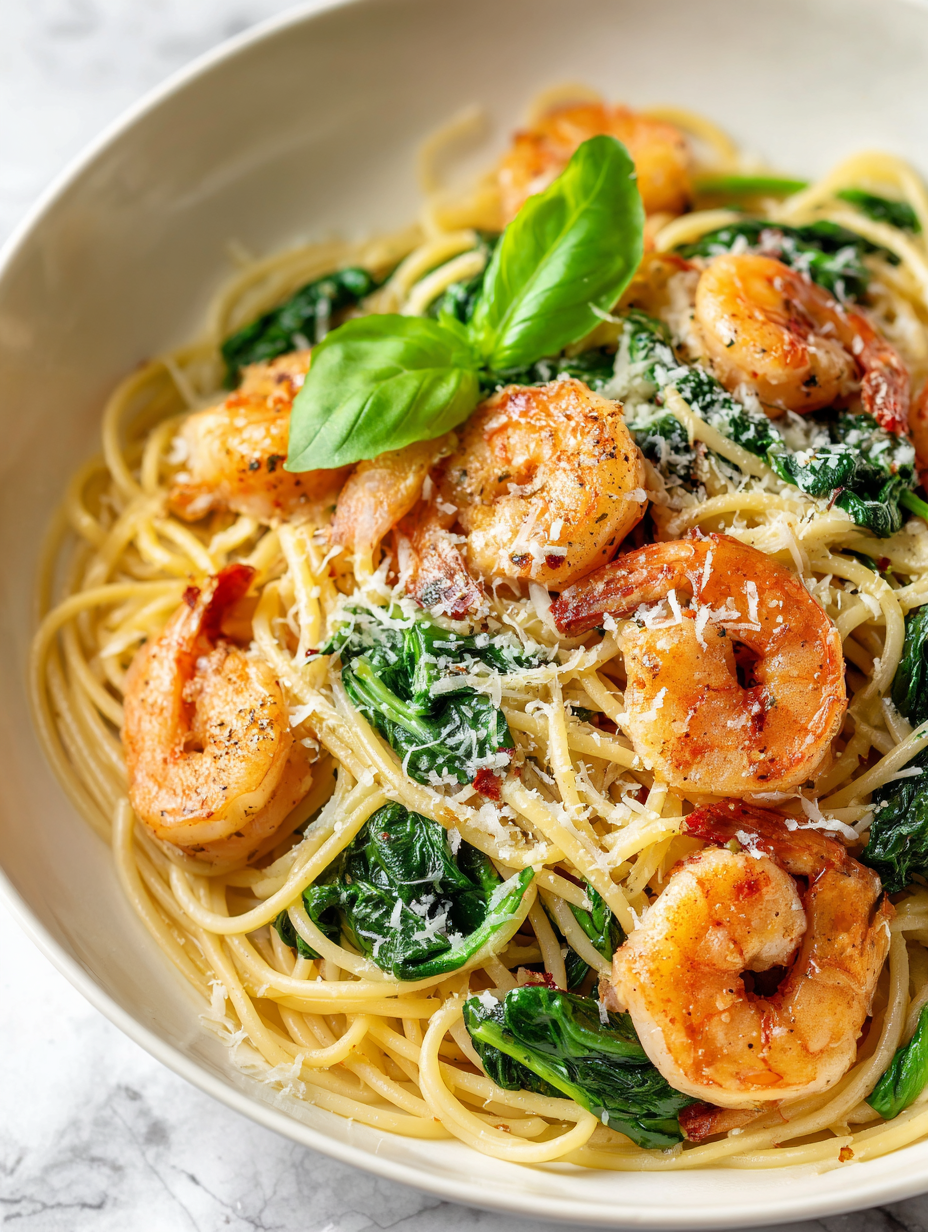
Shrimp Spinach Pasta
Ingredients
Equipment
Method
- Bring a large pot of salted water to a rolling boil and cook the pasta until just al dente, about 8 minutes. Reserve 1/4 cup of pasta water, then drain and set aside.
- While the pasta cooks, peel and devein the shrimp if needed. Pat them dry and season lightly with salt and pepper.
- Heat 2 tablespoons of olive oil in your skillet over medium-high heat until shimmering. Add the shrimp in a single layer and cook for 2-3 minutes per side, until they turn pink and opaque. Remove and set aside.
- Lower the heat to medium. Add the sliced garlic to the pan and sauté for about 30 seconds until fragrant, making sure not to burn it—you'll smell a sweet aroma as it releases its scent.
- Add the fresh spinach to the skillet and cook, stirring constantly, until just wilted, about 1-2 minutes. If using frozen spinach, ensure it’s well squeezed to remove excess water first.
- Transfer the cooked pasta to the skillet with the spinach and garlic. Pour in the reserved pasta water and squeeze in the lemon juice. Toss everything together quickly so the pasta absorbs the flavors and the sauce becomes silky.
- Return the cooked shrimp to the skillet and gently toss to combine. Drizzle with a little more olive oil if needed, and season with additional salt and pepper to taste.
- Finish by zesting the lemon over the dish for extra brightness. Serve immediately with extra lemon wedges if desired, and enjoy the vibrant contrast of flavors and textures.
Quick tips for perfect pasta
- Bolded mini-head: Use high heat when sautéing shrimp—listen for a lively crackle that signals perfect sear.
- Bolded mini-head: Sliced garlic cooks faster and more evenly—add it when oil is shimmering, not smoking, to avoid bitterness.
- Bolded mini-head: Wilt spinach in small batches—adding gradually ensures vibrant color and prevents sogginess.
- Bolded mini-head: Reserve pasta water before draining—its starchy goodness helps create a silky, clingy sauce.
- Bolded mini-head: Don’t overcook the shrimp—aim for opaque and firm, about 2-3 minutes per side, for a sweet bite.
- Bolded mini-head: Finish with a squeeze of lemon off the heat—brightens flavors without overpowering the delicate seafood.
- Bolded mini-head: Toss pasta and ingredients together quickly—this keeps everything warm and flavors well integrated.
Common mistakes and how to fix them
- FORGOT to preheat pan → Always start with a hot pan for shrimp’s perfect sear.
- DUMPED spinach in all at once → Add spinach gradually for even wilt and vibrant color.
- OVER-TORCHED garlic → Sauté garlic until fragrant, not browned or burnt, to avoid bitterness.
- LEFT pasta water unreserved → Save pasta water; it’s key for adjusting sauce consistency.
Quick fixes and pantry swaps
- When sauce looks too thick, splash in a bit of pasta water to loosen it up.
- If shrimp aren’t pink and opaque, cook for a minute longer; avoid overcooking for firmness.
- Splash lemon juice at the end for brightness—if it’s dull, add a fresh squeeze.
- Patch burnt garlic by removing it quickly and adding fresh slices to revive aroma.
- Shield spinach from over-wilting by adding it in small batches and stirring gently.
Prep, store, and reheat tips
- Cook and drain pasta ahead of time; store in an airtight container in the fridge for up to 2 days. The texture may soften slightly, so reheat gently.
- Peel and devein shrimp in advance; keep covered in the fridge for up to 24 hours. Scent should remain sweet and briny; avoid any fishy smell.
- Wash and dry spinach thoroughly; store in a sealed bag for 1-2 days. Wilted spinach can lose vibrancy, so add fresh if possible upon reheating.
- Prepare garlic slices and lemon zest ahead; keep refrigerated in a small container. Freshness diminishes after a day, so use within 24 hours for best aroma.
- Reheat leftovers in a skillet over low-medium heat, adding a splash of water or olive oil. The pasta may cling slightly; stir gently until heated through and fragrant.
Top questions about Shrimp Spinach Pasta
1. Can I use frozen shrimp?
Use fresh shrimp for the best flavor and texture. Frozen works in a pinch but may be slightly less tender.
2. How long should I cook the pasta?
Cook the pasta just until al dente, about 8 minutes, to avoid mushiness when tossed later.
3. When do I add the garlic?
Add garlic slices when the oil is hot and shimmering, cooking until fragrant but not browned, about 30 seconds.
4. Should I add lemon before or after cooking?
Squeeze lemon juice after removing from heat to keep that bright, fresh flavor intact.
5. How do I cook the spinach?
Wilt the spinach quickly, about 1-2 minutes, until just tender and vibrant green, to keep its texture.
6. Why should I save pasta water?
Save about a cup of pasta water before draining; it helps loosen the sauce and make it cling better.
7. What equipment do I need?
Use a large, deep skillet or sauté pan (around 30cm/12 inches) for easy tossing and even cooking.
8. How hot should the pan be?
High heat is key for searing shrimp—listen for a crackling sound to ensure it’s hot enough.
9. How do I finish and serve?
Finish the dish with a drizzle of olive oil and a squeeze of lemon for extra shine and brightness.
10. Can I make this ahead and reheat?
Reheat leftovers gently in a skillet with a splash of water or oil, stirring until warm and fragrant.
This dish isn’t just about quick cooking; it’s about capturing that moment when garlic, shrimp, and spinach come together in a fragrant, bright-tasting bowl. It’s honest, unpretentious, and perfect for those nights when you want something satisfying without fuss.
Whenever I make this, I’m reminded that simple ingredients, treated well, can turn an ordinary dinner into a little celebration. It’s a reminder to appreciate the small, flavorful wins in my busy kitchen life.