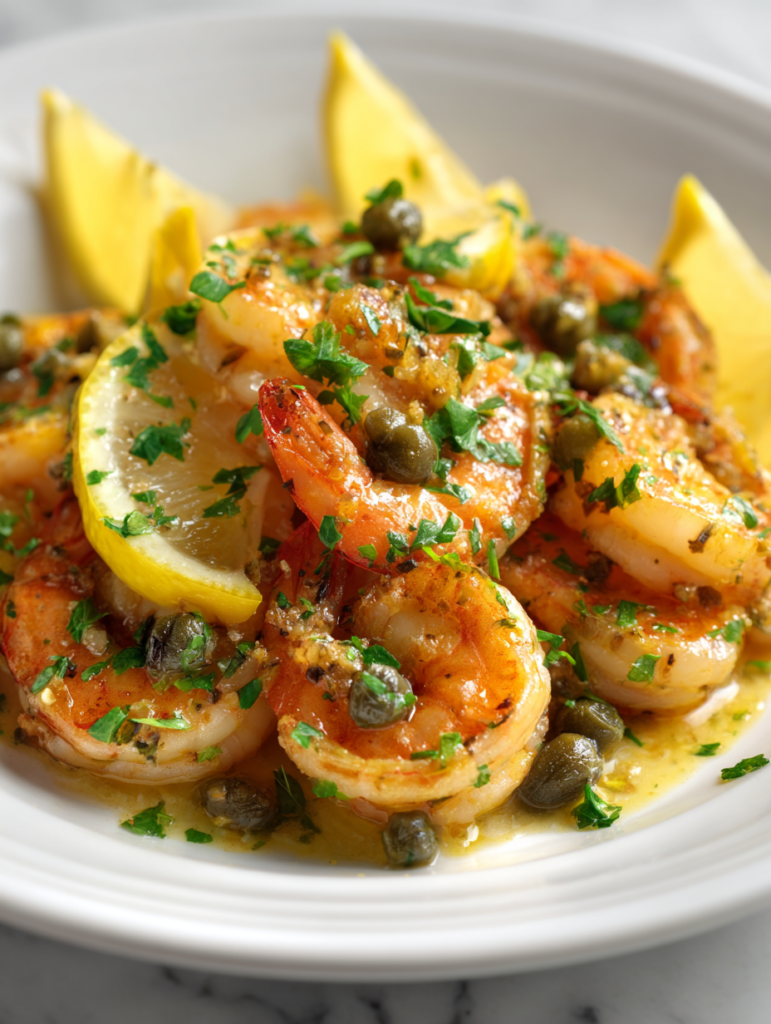
Shrimp piccata might sound fancy, but it’s really about turning everyday ingredients into something special without breaking a sweat. I love how a handful of capers, a squeeze of lemon, and good shrimp can come together in a quick skillet moment that feels like a restaurant treat. It’s the kind of dish you can throw together after a long day and still feel proud of.
What really draws me to this recipe is how it balances brightness and richness—bright lemon, briny capers, and buttery shrimp that melt in your mouth. It’s simple, honest cooking that doesn’t get in its own way. Plus, there’s something satisfying about transforming humble ingredients into a dish that feels bright and celebratory, even on a weeknight.
Focusing on how a simple, humble shrimp dish can be elevated with a few unexpected ingredients, like capers and lemon, transforming it into a restaurant-worthy plate that’s surprisingly quick to whip up after a long day.
A Secret Ingredient for Brightness
- I love how this dish reminds me of summer nights by the coast, bright lemon and salty air in every bite.
- There’s a rush of pride when I pull off a perfect, golden shrimp that’s tender and juicy inside.
- This recipe’s simplicity somehow makes me feel like a confident home chef, ready to impress with just a skillet and a few ingredients.
- Cooking this fills the kitchen with the zesty aroma of lemon and the comforting smell of butter melting—a real sensory treat.
The story behind this recipe
- This dish came about on a night when I was craving something bright and lively but didn’t want to spend hours in the kitchen. I remembered a trip to Italy where I had fresh, tangy lemon and briny capers dancing in a simple, yet unforgettable sauce. That memory stuck with me, and I started experimenting in my own kitchen to recreate that burst of flavor.
- What’s funny is how often I turn to this recipe when I want something quick but feel like I need a little celebration—like a small victory in the middle of a hectic week. It’s become my go-to for a meal that feels indulgent but is honestly just a few pantry staples and a quick sauté away. Sometimes, I just need that hit of bright citrus and salty capers to reset the mood.
- heading: The story behind this recipe
Trivia and Historical Tidbits
- Shrimp piccata has roots in Italian cookery, where lemon and capers are traditional flavor accents.
- The technique of ‘pounding’ or tenderizing shrimp before cooking is a modern twist, making the dish quicker and juicier.
- Capers, often associated with Mediterranean dishes, were historically used for their preservative qualities and sharp flavor.
- This dish became popular in American households in the mid-20th century, blending Italian flavors with local ingredients.
- The bright, acidic notes of lemon in piccata were originally used to cut through rich, fatty meats and seafood.
Key Ingredients Breakdown
- Shrimp: I like to use large, deveined shrimp with tails on for a better presentation and flavor. You can swap with scallops if you prefer a different seafood star.
- Lemon: Bright, zesty lemon juice is key. Use fresh lemons for that sharp, juicy burst—skip bottled juice for the best tang.
- Capers: Briny, slightly tangy capers add depth. Rinse them quickly if you want less salt, or use un-rinsed for a saltier kick.
- Butter: I rely on good unsalted butter for richness. You could try olive oil for a lighter version, but the sauce will be less velvety.
- Garlic: Fresh garlic cloves, crushed or minced, bring a warm aroma. Dried garlic powder can work in a pinch but won’t deliver the same punch.
- White wine: A splash of dry white wine adds a subtle acidity. If you prefer non-alcoholic, a bit of chicken broth with a squeeze of lemon works fine.
- Flour: Lightly dusting the shrimp in flour helps create a golden crust. For gluten-free, try rice flour or cornstarch—just don’t overdo it.
Spotlight on key ingredients
Shrimp:
- I love using large, deveined shrimp with tails on for a better presentation and flavor. You can swap with scallops if you prefer a different seafood star.
- Lemon: Bright, zesty lemon juice is key. Use fresh lemons for that sharp, juicy burst—skip bottled juice for the best tang.
- Capers: Briny, slightly tangy capers add depth. Rinse them quickly if you want less salt, or use un-rinsed for a saltier kick.
Lemon:
- The aroma of fresh lemon zest and juice is invigorating. It brightens the sauce and cuts through richness with a tangy punch.
- Capers: These tiny briny buds add a salty, tangy burst that complements the shrimp perfectly. Their texture becomes slightly chewy when cooked, adding contrast.
Notes for ingredient swaps
- Shrimp: I prefer large, deveined shrimp with tails on for flavor and presentation. Swap with scallops if you like a different seafood twist.
- Lemon: Use fresh lemons for that sharp, juicy brightness. Bottled lemon juice will work in a pinch but won’t be as vibrant.
- Capers: Rinse them if you want less salt and a milder briny punch. Keep them un-rinsed for a more pronounced salty tang.
- Butter: Unsalted butter gives richness and control over salt. Olive oil can be a lighter alternative, but the sauce won’t be as velvety.
- Garlic: Fresh garlic cloves bring warmth and aroma. Dried garlic powder can replace, but won’t deliver the same punch or freshness.
- White wine: A dry white wine adds subtle acidity. For no-alcohol, try chicken broth with a splash of lemon for that same bright lift.
- Flour: Lightly dusting the shrimp helps crisp them up. For gluten-free, rice flour or cornstarch can be used, but keep the coating thin.
Equipment & Tools
- Large skillet: For searing shrimp and cooking the sauce evenly.
- Slotted spoon: To flip shrimp and remove them without excess oil.
- Small bowl: For mixing or holding ingredients like lemon juice and capers.
- Measuring cup: To accurately add wine, lemon juice, and broth.
Step-by-step guide to Shrimp Piccata
- Equipment ready: a large skillet (10-12 inch), a slotted spoon, a small bowl, and a measuring cup. The skillet is for a quick, even sear; the spoon for sauce manipulation; the bowl for dredging shrimp.
- Pat shrimp dry with paper towels. Season with salt and pepper. Lightly dust with flour, shaking off excess. This helps achieve a crisp exterior.
- Heat skillet over medium-high heat (around 180°C/350°F). Add 2 tbsp butter and 1 tbsp olive oil. Wait until butter melts and sizzles—about 30 seconds.
- Add shrimp in a single layer. Sear for 2 minutes without moving, then flip. Cook for another 1-2 minutes until golden. Shrimp should be pink and opaque. Remove and set aside.
- In the same skillet, add 2 minced garlic cloves. Cook for 30 seconds until fragrant and slightly golden. Watch for burning—reduce heat if garlic browns too quickly.
- Deglaze with 1/4 cup dry white wine. Scrape up browned bits with the spoon. Let it simmer for 2 minutes until slightly reduced and fragrant.
- Add 1/4 cup capers (rinsed if less salty), 2 tbsp lemon juice, and 1 tbsp butter. Stir until butter melts and the sauce thickens slightly, about 1 minute. It should be bright, fragrant, and slightly velvety.
- Return shrimp to skillet. Toss gently in sauce for 30 seconds to reheat. Check for even coating and a glossy finish. If sauce is too thin, cook a little longer; if too thick, add a splash of broth.
- Remove from heat. Rest for 1 minute. Plate shrimp with sauce spooned over. Garnish with lemon slices or chopped parsley if desired.
- Serve immediately with crusty bread or over pasta. The shrimp should be tender, with a bright, lemony, briny flavor shining through.
Let the dish rest for a minute before serving to allow flavors to meld. Drizzle any remaining sauce over the shrimp, garnish with lemon slices or herbs, and serve immediately with crusty bread or pasta.
How to Know It’s Done
- Shrimp is opaque and pink, with a firm yet tender texture.
- Sauce is glossy, fragrant, and slightly thickened, coating the shrimp evenly.
- Color: shrimp are golden-brown on the edges, sauce has a bright lemon hue with visible capers.
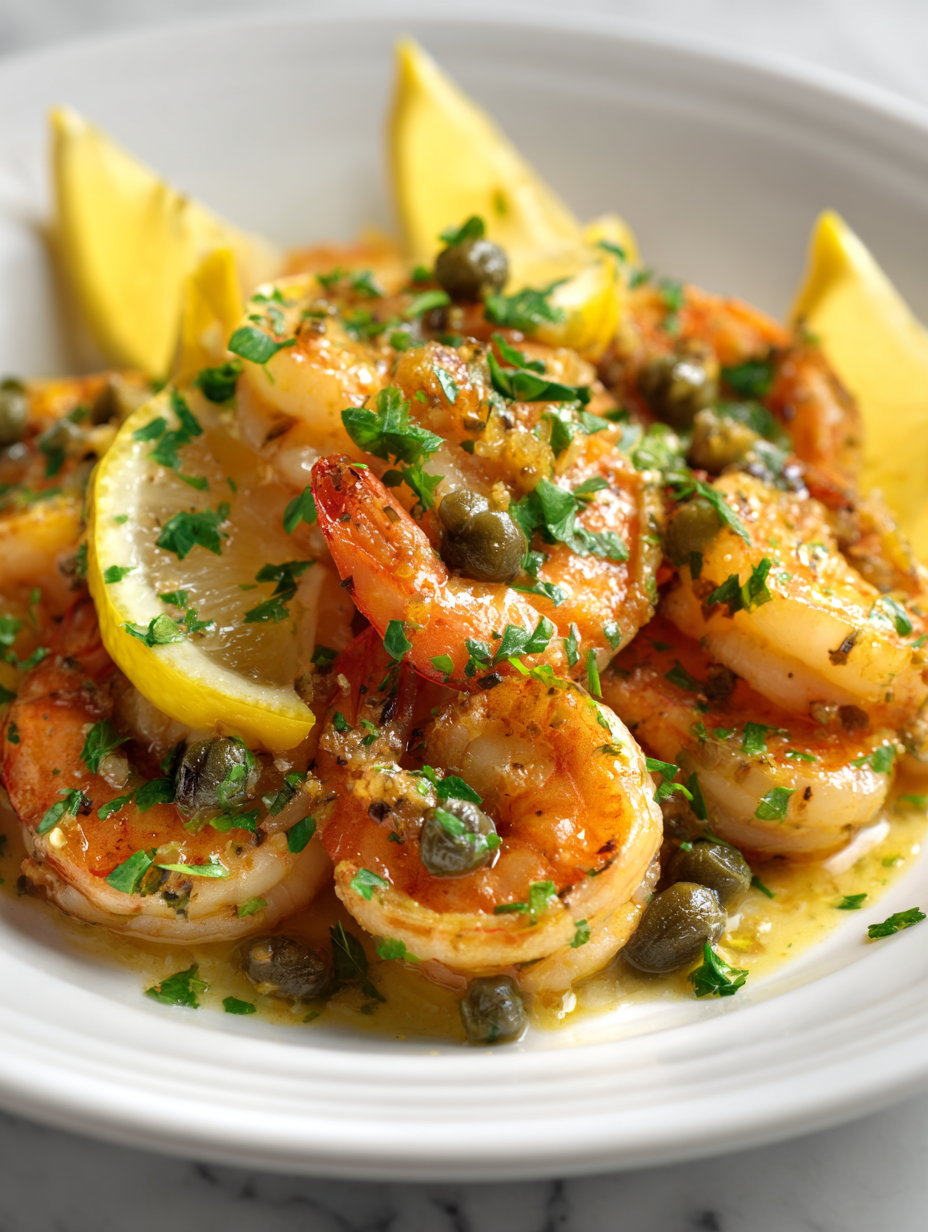
Shrimp Piccata
Ingredients
Equipment
Method
- Pat the shrimp dry and season lightly with salt and pepper. Spread flour on a plate and lightly dredge the shrimp, shaking off excess for a thin, even coating.
- Heat a large skillet over medium-high heat, then add 1 tablespoon of butter and 1 tablespoon of olive oil. Once melted and bubbling, add the shrimp in a single layer.
- Sear the shrimp without moving for about 2 minutes, until they turn golden brown on the bottom. Flip carefully with a slotted spoon and cook another 1-2 minutes until fully opaque and pink. Remove the shrimp and set aside.
- In the same skillet, add the minced garlic and cook for about 30 seconds until fragrant and slightly golden, stirring constantly to prevent burning.
- Deglaze the pan with the white wine or broth, scraping up any browned bits from the bottom. Let it simmer for 2 minutes until the liquid reduces slightly and the aroma intensifies.
- Add the rinsed capers, lemon juice, and remaining 2 tablespoons of butter. Stir gently until the butter melts and the sauce becomes glossy and fragrant, about 1 minute.
- Return the cooked shrimp to the skillet, tossing gently to coat them in the sauce. Cook for another 30 seconds to reheat and meld flavors.
- Remove from heat and let rest for a minute. Serve immediately, spooning the bright, glossy sauce over the shrimp, garnished with lemon slices or parsley if desired.
Pro tips for perfect shrimp piccata
- sear: Use high heat to get a quick, golden crust on the shrimp—don’t overcrowd the pan.
- Brighten early: Squeeze lemon juice into the sauce early to meld flavors and balance the richness.
- Capper patience: Rinse capers if you want less salt, but don’t skip the briny punch they bring.
- Butter finish: Add butter at the end to create a silky, velvety sauce that clings to the shrimp.
- Deglaze smart: Use white wine to lift browned bits, but let it simmer until fragrant before adding other ingredients.
- Toss gently: When reheating, fold shrimp into sauce to prevent breaking or overcooking the delicate meat.
- Taste often: Adjust lemon, salt, and capers at the end for a perfectly balanced, zingy flavor.
Common mistakes and how to fix them
- OVERCOOKED SHRIMP: They turn rubbery; remove from heat immediately when pink and firm.
- DUMPED TOO MUCH FLOUR: It causes clumping; shake off excess for a light coating.
- SAUCE SEEMS WEAK: If too thin, simmer longer or add a small amount of butter to thicken.
- LEMON FLAVOR IS MISSING: If dull, add a splash more lemon juice and zest for brightness.
Quick fixes and pantry swaps
- If sauce shimmers without thickening, splash in a touch more butter and simmer briefly.
- When shrimp curl tightly, they are overcooked; remove immediately and serve with residual heat.
- Splash more lemon if the sauce lacks brightness or tang to lift the flavors.
- Patch a too-salty sauce with a small splash of broth or water, then simmer gently.
- Shield the pan with a lid if garlic or capers start to burn quickly—reduce heat immediately.
Prep, store, and reheat tips
- Prep the shrimp: Devein and pat dry up to 1 day in advance, then store covered in the fridge. The texture stays firm, making cooking quicker.
- Make the sauce ahead: Combine lemon juice, capers, and garlic up to 2 days ahead. Keep refrigerated; the bright flavors intensify overnight.
- Storage: Keep cooked shrimp in an airtight container for up to 2 days. Reheat gently in a skillet to preserve tenderness.
- Reheating: Warm in a skillet over low heat, stirring gently until just heated through. The sauce may thicken slightly, so add a splash of broth or lemon juice for brightness.
Top questions about shrimp piccata
1. How do I pick the best shrimp for this dish?
Look for large, raw shrimp that are firm and pink—fresh or thawed, deveined, with shells on for flavor. Skip pre-cooked shrimp for the best texture.
2. Can I use bottled lemon juice instead of fresh?
Use freshly squeezed lemon juice for that bright, tangy burst. Bottled lemon can work but lacks the vibrant zing.
3. Should I rinse the capers?
Rinse capers quickly if you want less saltiness, but leaving some brine adds a necessary salty punch. Keep in mind, rinsed capers are milder.
4. Can I make this without wine?
A splash of white wine adds a subtle acidity and depth. If you skip alcohol, replace with chicken broth and a squeeze of lemon.
5. Do I need to flour the shrimp?
Dust the shrimp lightly with flour to help them crisp up and create a lovely golden crust. Use rice flour or cornstarch for gluten-free diets.
6. How do I know when the shrimp are cooked enough?
Cook the shrimp until they turn opaque and pink, about 2-3 minutes. They should feel firm but not rubbery when pressed gently.
7. Why add butter at the end?
Add butter at the end of cooking for a silky, velvety sauce that clings to the shrimp. It also enriches the bright lemon flavor.
8. Can I make it ahead and reheat?
This dish is best served immediately while the shrimp are tender and the sauce is bright and glossy. Reheat gently if needed, but fresh is best.
9. What if my shrimp are overcooked?
Overcooked shrimp turn rubbery; remove from heat as soon as they turn pink and feel firm. For sauce, simmer until glossy and slightly thickened.
10. My sauce is too salty or thin, what do I do?
If the sauce seems too thin, simmer a bit longer or whisk in a small pat of butter. For too salty sauce, add a splash of broth or lemon juice.
This shrimp piccata feels like a little victory in the middle of chaos—bright, quick, and honest. It’s the kind of dish that reminds me how simple ingredients can surprise you with a touch of brightness and saltiness.
Sharing this recipe is about capturing that moment when everything comes together effortlessly. It’s a reminder that good, flavorful food doesn’t need to be complicated, just honest and a little bold. Sometimes, a simple skillet and a splash of lemon are all you need to turn a busy night around.