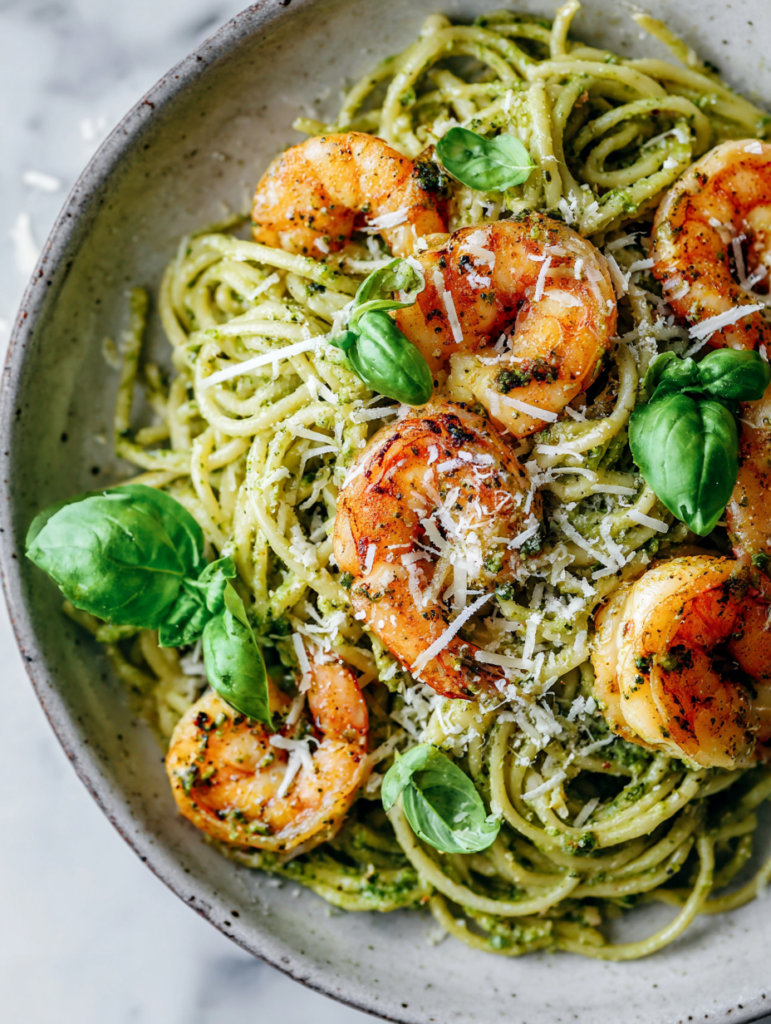
Sometimes, the simplest dishes are the most satisfying, especially when you give them a little twist. This shrimp pesto pasta idea started as a quick weeknight fix but turned into a bit of a revelation in my kitchen. It’s about how a homemade pesto — with its fragrant basil, garlic, and pine nuts — can really lift a humble pasta and shrimp combo into something more memorable.
What I love most is how flexible this dish is. You can tweak the pesto for a peppery punch or add a splash of lemon to brighten everything up in seconds. It’s a reminder that even simple ingredients, when treated with a bit of care, can create a dish that feels special enough for guests or just a cozy night in.
This recipe emphasizes how a simple, homemade pesto can elevate shrimp pasta from everyday to memorable, especially when you tweak the basil for a more peppery kick or add a hint of lemon zest for brightness. It’s about transforming humble ingredients into a dish that feels special, even on a rushed weeknight.
Elevating Shrimp with Fresh Pesto
- Cooking this dish always reminds me of summer evenings on my balcony, the smell of basil wafting through the air.
- I used to think pesto was only for toast or sandwiches, but making it fresh for this pasta changed everything.
- There’s a quiet pride I feel when I see the bright pink of perfectly cooked shrimp nestled in vibrant green pesto.
- This recipe has been my go-to when I need comfort—something about the creamy pesto and tender shrimp always hits the right spot.
The story behind this recipe
- This dish took shape during a chaotic dinner rush. I was out of my usual ingredients but had a bunch of fresh basil and some frozen shrimp. Turning those everyday items into something vibrant and fragrant felt like a small victory amid the mess.
- The moment I blended that pesto and tossed it with warm pasta, I remembered how simple ingredients can surprise you. It’s become my fallback when I want a meal that’s quick but still feels like I put some care into it.
- Every time I make this, I think about how a handful of basil and a squeeze of lemon can transform a plate. It’s honest cooking, no fuss, just a little bit of love stirred in.
Historical Tidbits of Pesto & Seafood
- This dish combines the seaside freshness of shrimp with the vibrant, herbaceous punch of homemade pesto, a pairing rooted in Mediterranean coastal cuisines.
- Pesto’s origins trace back to Genoa, Italy, where basil was historically scarce; locals substituted with other herbs, but basil remains king today.
- Using shrimp in pasta dishes became popular in coastal regions of Italy and Spain in the early 20th century, offering a quick, flavorful seafood option.
- The idea of blending herbs, nuts, and oil into a sauce dates back centuries, but the modern pesto gained popularity in the 19th century as a rustic, flavorful condiment.
Ingredient breakdown
- Shrimp: I prefer large, raw shrimp for their juicy bite—make sure they’re pink and firm. Swap for scallops if you want a sweeter, tender alternative.
- Basil: Fresh basil is fragrant and bright—smell that sweet, peppery aroma when you pick it. Dried basil isn’t a good substitute here; go for fresh or skip if unavailable.
- Pine nuts: Toasted pine nuts add a buttery, smoky depth—listen for their gentle crackle in the pan. Swap with walnuts if you want a slightly earthier flavor.
- Olive oil: Use good-quality extra virgin olive oil for richness—look for a shiny, grassy hue. Light or flavorless oils won’t give the pesto that vibrant punch, but can be used in a pinch.
- Lemon zest: Brightens everything with a zing—feel the fine grating on your fingertips and smell that citrusy pop. Skip if you prefer a milder, herb-focused pesto.
- Garlic: Fresh garlic transforms the pesto with its pungent, spicy aroma—smell it as you mince. Roasted garlic can add a sweeter, mellow tone if desired.
- Parmesan: Sharp, salty, and slightly granular—grate it fresh for the best flavor. Nutritional yeast can be a decent dairy-free alternative, but it won’t melt into the pesto as smoothly.
Spotlight on key ingredients
Shrimp:
- I prefer large, raw shrimp for their juicy bite—make sure they’re pink and firm. Swap for scallops if you want a sweeter, tender alternative.
- Basil: Fresh basil is fragrant and bright—smell that sweet, peppery aroma when you pick it. Dried basil isn’t a good substitute here; go for fresh or skip if unavailable.
- Pine nuts: Toasted pine nuts add a buttery, smoky depth—listen for their gentle crackle in the pan. Swap with walnuts if you want a slightly earthier flavor.
Basil:
- The vibrant, aromatic leaves burst with a sweet, peppery scent—feel the delicate texture as you bruise them. They turn intensely fragrant when blended, creating that unmistakable pesto aroma.
- Pine nuts: These small nuts toast quickly, releasing a rich, buttery aroma and developing a gentle crackle. During blending, they break down into creamy bits that add depth to the pesto’s texture.
Notes for ingredient swaps
- Protein: Swap shrimp for scallops or chunks of firm white fish—each brings a different texture and slightly different flavor profile, but still delicious.
- Nuts: Replace pine nuts with walnuts or almonds—these will add a nuttier, earthier note, and are often more budget-friendly.
- Herbs: If basil is unavailable, try arugula or spinach for a milder, leafy green twist, though the flavor will be less aromatic.
- Cheese: Parmesan can be swapped with Pecorino Romano for a sharper, saltier kick, or skip cheese altogether for a dairy-free pesto.
- Oil: Use avocado oil or light vegetable oil if olive oil isn’t available—these won’t add the same grassy flavor but will do the job.
- Lemon zest: Substitute with a splash of white wine vinegar or a dash of lime zest for a different bright acidity.
- Pasta: Whole wheat or gluten-free pasta can replace traditional spaghetti—keep in mind they may cook slightly differently and affect texture.
Equipment & Tools
- Large skillet: To sear shrimp and toss pasta with pesto.
- Pot: To boil pasta efficiently.
- Blender or food processor: To make fresh, smooth pesto.
- Slotted spoon: To remove shrimp and drain pasta without excess water.
Step-by-step guide to Shrimp Pesto Pasta
- Gather your equipment: a large skillet (preferably non-stick), a pot for boiling pasta, a blender or food processor, and a slotted spoon.
- Start boiling water in your pot—salty like the sea, about 4 liters (4 quarts), bring to a rolling boil at 100°C (212°F).
- Cook the pasta: add 400g (14 oz) of spaghetti or linguine. Cook for 8-10 minutes until al dente. Taste a strand—firm but tender.
- While pasta cooks, peel and devein 300g (10 oz) of large shrimp. Pat dry, season lightly with salt and pepper.
- Heat your skillet over medium-high heat—about 180°C (356°F). Add 1 tbsp olive oil, then shrimp. Sear until pink and opaque, about 2-3 minutes per side.
- Remove shrimp, set aside. In the same pan, sauté 2 minced garlic cloves until fragrant—about 30 seconds, should smell sweet and spicy.
- Drain pasta, reserving ½ cup pasta water. Add cooked pasta directly to the skillet with garlic and shrimp, over medium heat.
- Toss in 3-4 tbsp pesto (see ingredient breakdown), stirring quickly to coat pasta evenly. If too thick, loosen with reserved pasta water, a splash at a time.
- Check the sauce: it should cling to pasta, glossy and vibrant green. The shrimp should be juicy, and pasta tender yet firm.
- Finish with a squeeze of lemon, a sprinkle of Parmesan, and freshly ground black pepper. Toss again gently.
- Rest for 2 minutes off heat. Plate the pasta, garnish with extra basil or lemon zest if desired.
- Serve immediately—watch the pesto shimmer, smell the garlic and basil, and enjoy that bright, herbaceous bite.
Let the plated pasta rest for a minute to settle flavors. Finish with an extra drizzle of olive oil or squeeze of lemon before serving for a fresh kick.
How to Know It’s Done
- Shrimp are pink and opaque, with a slight bounce when pressed.
- Pasta is tender but not mushy, with a slight bite (al dente).
- Pesto is vibrant, glossy, and coats the pasta smoothly, without clumping.
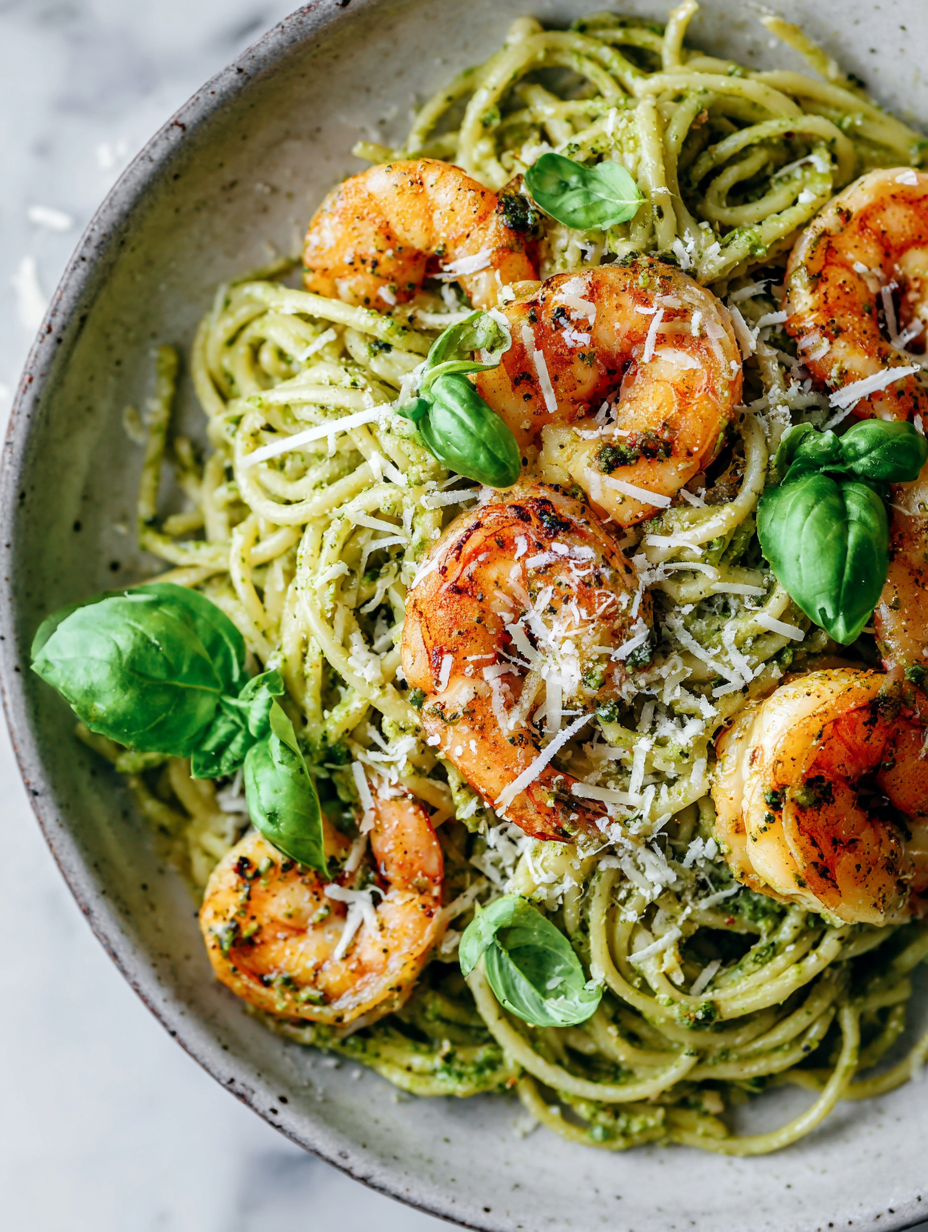
Shrimp Pesto Pasta
Ingredients
Equipment
Method
- Bring a large pot of salted water to a rolling boil and add the pasta. Cook until al dente, about 8-10 minutes, then drain and set aside.
- While the pasta cooks, peel and devein the shrimp, then pat them dry with paper towels. Season lightly with salt and pepper.
- Heat a large skillet over medium-high heat and add a tablespoon of olive oil. Once shimmering, add the shrimp and sear for about 2-3 minutes per side until they turn pink and opaque. Remove and set aside.
- Add the minced garlic to the same skillet and sauté for about 30 seconds until fragrant, being careful not to burn it. The garlic should become aromatic and slightly golden.
- While the garlic cooks, prepare the pesto by blending fresh basil, toasted pine nuts, grated Parmesan, lemon zest, and olive oil until smooth and vibrant green. Season with salt and pepper to taste.
- Add the cooked pasta to the skillet with garlic, tossing to combine and warm through. If the mixture feels too thick, add a splash of reserved pasta water to loosen it.
- Stir in the pesto, coating the pasta evenly and adding the seared shrimp back into the skillet. Toss gently to combine everything well and heat for another minute.
- Serve immediately, garnished with extra basil leaves or lemon zest if desired. The dish should look vibrant with a glossy coating of pesto and perfectly cooked shrimp nestled on top.
Pro Tips for Perfect Shrimp Pesto
- Bolded mini-head: Use fresh basil leaves; they release the most aroma and vibrant green color when blended.
- Bolded mini-head: Toast pine nuts until golden; they crackle and release a rich, buttery aroma that enhances the pesto.
- Bolded mini-head: Sear shrimp over medium-high heat until just pink; overcooking makes them tough, so keep an eye on that color change.
- Bolded mini-head: Reserve pasta water; its starchy content helps loosen the pesto if it clumps or feels too thick.
- Bolded mini-head: Toss pasta and pesto off heat; this prevents the pesto from oxidizing and turning dull or bitter.
- Bolded mini-head: Add lemon zest at the end; it brightens the pesto and balances the richness of the nuts and cheese.
- Bolded mini-head: Rest the pasta briefly before serving; allows flavors to meld and ensures a glossy, inviting presentation.
Common Shrimp Pesto Pasta Mistakes
- FORGOT to seed the shrimp; devein for cleaner texture and appearance.
- DUMPED pasta water without tasting; reserve ¼ cup for sauce consistency.
- OVER-TORCHED pesto; stir quickly off heat to prevent bitterness and preserve bright green.
- MISSED the resting step; let pasta sit off heat for 1 minute to meld flavors properly.
Quick fixes and pantry swaps
- When sauce is too thick, splash in warm pasta water and stir until glossy.
- If shrimp overcooks, quickly toss in cold water to halt the cooking process.
- Splash lemon juice if pesto tastes dull or flat—brightens instantly.
- Patch dull pesto with a drizzle of good olive oil and a pinch of salt.
- Shield pesto from browning by tossing with hot pasta immediately after blending.
Prep, store, and reheat tips
- Prep the pesto ahead: blend and store in an airtight container for up to 2 days. The vibrant green may fade slightly but will keep its fresh aroma.
- Cook the pasta a few hours in advance, then toss with a bit of olive oil to prevent sticking. Refrigerate in a sealed container for up to 24 hours, reheating gently.
- Peel and devein shrimp the day before; store covered in the fridge for up to 24 hours. Pat dry before cooking to avoid excess moisture and splattering.
- Reheat leftovers gently in a skillet over low heat, stirring often. The pesto may loosen; add a splash of warm water or broth to revive the sauce’s creamy texture.
- For best sensory results, consume within 24 hours of storing. The pesto may darken slightly and the shrimp can become less plump, so eat promptly for optimal flavor and texture.
Top questions about Shrimp Pesto Pasta
1. Can I use frozen shrimp?
Use large, raw shrimp for juicy bites; devein for clean texture. Frozen shrimp work fine if thawed properly.
2. Can I swap the shrimp for another seafood?
Yes, substitute with scallops or chunks of firm white fish for different textures but keep an eye on cooking times.
3. Can I use dried basil instead of fresh?
Fresh basil gives the best aroma and vibrant color. Dried basil can be used in a pinch but won’t be as bright.
4. What’s a good substitute for pine nuts?
Toasting pine nuts enhances their richness and aroma. Walnuts or almonds can be used but will change the flavor profile.
5. How do I cook the pasta properly?
Cook the pasta al dente, about 8-10 minutes. Reserve some pasta water to loosen the pesto if needed.
6. How do I know when the shrimp are done?
Sear shrimp over medium-high heat until pink and opaque, about 2-3 minutes per side. Overcooking makes them tough.
7. Can I use a different oil for the pesto?
Use good-quality extra virgin olive oil for the pesto. It’s key to a bright, fresh flavor and smooth texture.
8. Should I add lemon zest or juice?
Add lemon zest at the end to brighten the dish. A squeeze of lemon before serving enhances freshness.
9. Can I make this ahead and reheat?
Serve immediately to enjoy the pesto’s vibrancy and the shrimp’s juiciness. Reheat gently if needed.
10. How far ahead can I prepare the pesto?
Pesto can be prepared a day in advance and stored in the fridge. Keep it covered to prevent browning.
This dish is a reminder that even simple ingredients can come together in a way that feels indulgent and satisfying. The bright herbal aroma, tender shrimp, and silky pesto make it perfect for a quick weeknight dinner or a casual gathering.
Once you get the hang of balancing the flavors and textures, it’s a recipe you’ll return to when you want something comforting yet fresh, with minimal fuss and maximum flavor. It’s not just about the food, but the little moments of joy that come with perfecting a simple, honest meal.