
Shrimp fried rice is often just a quick fix, but I’ve found that tuning the balance between spice and citrus turns it into something special. It’s not about overpowering flavors, but about finding that sweet spot where the heat makes your nose tingle and the lemon brightness lifts everything up. I love playing with those contrasts, especially when I want a dish that feels lively and fresh, even after a long day.
This recipe is born from countless dinners where I’ve tweaked and tasted, trying to get that elusive harmony. It’s pretty forgiving, but the trick is in the timing and the way you season—nothing should taste dull or flat. When it all comes together, those little bursts of citrus and the smoky depth of the shrimp make every bite a reminder that simple ingredients, when balanced right, can really wake up your palate.
Focusing on the overlooked art of balancing spice and citrus in shrimp fried rice, transforming a simple dish into a vibrant, flavor-packed experience that awakens the senses.
Balancing citrus and spice
- Cooking this dish reminds me of lazy weekends in my childhood, where the smell of shrimp and garlic filled the air.
- I love how a splash of lemon can completely wake up the richness of the shrimp and rice, making every bite feel bright and fresh.
- There’s a quiet pride in balancing the spice and citrus just right, turning a simple fried rice into something memorable.
The story behind this recipe
Making this shrimp fried rice came from a craving for that perfect balance—something lively but not overwhelming, with a touch of nostalgia. I remember nights when my kitchen was filled with the smell of garlic and shrimp, and I’d toss in whatever was in the fridge, trying to make it just right. Over time, I realized that the secret was in how I layered flavors—getting that citrus punch to wake everything up without losing the smoky depth of the wok. It’s simple, honest cooking, but when it clicks, it’s like a little celebration in every bite.
Trivia and historical snippets
- Shrimp fried rice likely originated from Chinese cuisine, where stir-frying over high heat is a tradition that dates back centuries.
- The dish became popular worldwide as a quick, satisfying way to use leftover rice and seafood, especially in coastal areas.
- In some regions, adding citrus—like lemon or lime—to fried rice is a modern twist that enhances brightness and balances richness.
- This dish exemplifies how Asian-inspired flavors have fused globally, blending spice, citrus, and smoky notes into everyday comfort food.
Key ingredients and their quirks
- Shrimp: I prefer large, fresh shrimp with a firm texture and a slight sweetness. If yours are small or frozen, adjust cooking time so they don’t overcook and become rubbery.
- Rice: Day-old jasmine rice is my go-to. It’s fluffier, less sticky, and handles stir-frying without turning mushy—perfect for that chewy bite.
- Soy Sauce: I use a light soy for saltiness without darkening the rice too much. If you want a richer flavor, add a splash of dark soy but watch the salt.
- Lemon Juice: Bright, zesty, and just enough to cut through richness. Skip it if you’re not a citrus fan, but it really lifts the dish. Use fresh for the best zing.
- Garlic & Ginger: Fresh garlic and ginger bring a warm, aromatic punch. If pressed for time, pre-minced jars work, but fresh is always more vibrant and fragrant.
- Green Onions: I toss in sliced green tops at the end for a fresh, sharp bite. If you don’t have them, chopped cilantro can be a nice substitute, adding brightness.
- Sesame Oil: Just a drizzle at the end adds a toasty, nutty aroma. If you’re out, a splash of toasted oil or even neutral oil with a sprinkle of toasted sesame seeds works well.
Spotlight on Key Ingredients
Shrimp:
- I prefer large, fresh shrimp with a firm texture and a slight sweetness. If yours are small or frozen, adjust cooking time so they don’t overcook and become rubbery.
- Rice: Day-old jasmine rice is my go-to. It’s fluffier, less sticky, and handles stir-frying without turning mushy—perfect for that chewy bite.
- Soy Sauce: I use a light soy for saltiness without darkening the rice too much. If you want a richer flavor, add a splash of dark soy but watch the salt.
Aromatics and finishing herbs:
- Lemon Juice: Bright, zesty, and just enough to cut through richness. Skip it if you’re not a citrus fan, but it really lifts the dish. Use fresh for the best zing.
- Garlic & Ginger: Fresh garlic and ginger bring a warm, aromatic punch. If pressed for time, pre-minced jars work, but fresh is always more vibrant and fragrant.
- Green Onions: I toss in sliced green tops at the end for a fresh, sharp bite. If you don’t have them, chopped cilantro can be a nice substitute, adding brightness.
Notes for ingredient swaps
- Protein: Chicken or tofu can replace shrimp. Chicken needs to be cooked thoroughly; tofu should be firm and pan-fried until crispy for best texture.
- Rice: Use day-old brown rice if you prefer a nuttier flavor and chewier bite. Fresh rice will be softer and less ideal for stir-frying.
- Soy Sauce: Tamari or coconut aminos work as gluten-free options, although they may alter the saltiness and depth slightly.
- Citrus: Lime juice can substitute lemon for a brighter, slightly more tart flavor—great for a different twist.
- Oil: Avocado or neutral oils like canola can be used if sesame oil isn’t available. They won’t add toasted aroma but will cook just as well.
- Green Onions: Chives or chopped cilantro can stand in if you don’t have green onions, adding fresh herbal notes instead.
- Sesame Oil: If out, toasted walnut or a tiny splash of peanut oil adds a different nutty aroma, though less authentic.
Equipment & Tools
- Wok or large skillet: For quick, high-heat stir-frying.
- Spatula: To toss and scramble ingredients evenly.
- Sharp knife: For prep of garlic, ginger, and garnishes.
- Bowl: To hold cooked shrimp and prepared rice.
Step-by-step guide to shrimp fried rice
- Equipment & Tools: Gather a wok or large skillet (for high heat stir-frying), a spatula (to toss ingredients), a sharp knife (for prep), and a bowl (to hold cooked ingredients).
- Cook the shrimp. Heat wok over high heat (about 200°C/390°F). Add a splash of oil. When shimmering, toss in peeled, deveined shrimp. Cook 2-3 minutes until pink and slightly charred. Remove and set aside.
- Prepare the rice. If using leftover rice, break up clumps with a fork. For fresh rice, cook jasmine rice, then spread on a tray to cool and dry out for at least 30 minutes. Cold rice fries better—less sticky.
- Stir-fry aromatics. Add a little more oil to the hot wok. Toss in minced garlic and ginger (about 15 sec). Smell should turn fragrant, slightly toasty. Be quick so they don’t burn.
- Add rice. Push aromatics aside, add rice, and stir vigorously for 2-3 minutes. Look for some grains to turn lightly golden and smell toasted. If rice sticks or clumps, scramble with the spatula until separated.
- Season. Pour in soy sauce (about 2 tbsp), a splash of oyster or fish sauce if desired. Stir well, coating every grain evenly. Taste for saltiness and adjust. The rice should look shiny but not soaked.
- Reintroduce shrimp. Add cooked shrimp back to wok. Toss to combine and heat through for 1-2 minutes. Shrimp should be hot, opaque, and slightly caramelized on edges.
- Finish with citrus. Squeeze fresh lemon juice (about 1 tbsp) over the rice. Toss quickly to coat and brighten. The citrus aroma should lift the dish, balancing the savory flavors.
- Final touches. Turn off heat. Drizzle with a few drops of toasted sesame oil for aroma. Garnish with sliced green onions or cilantro. Serve immediately for best texture and flavor.
- Resting & Finishing: Let the fried rice sit for a minute off the heat. Serve directly from the wok, ensuring each bite has a good mix of shrimp, rice, and aromatics. Best eaten hot and fresh.
Let the fried rice rest for a minute to settle flavors. Plate directly from the wok, garnished with fresh herbs. Serve immediately while hot and fragrant.
How to Know It’s Done
- Shrimp should be opaque and slightly caramelized.
- Rice grains should be separate and not mushy.
- The dish should smell fragrant with citrus and toasted aromatics.
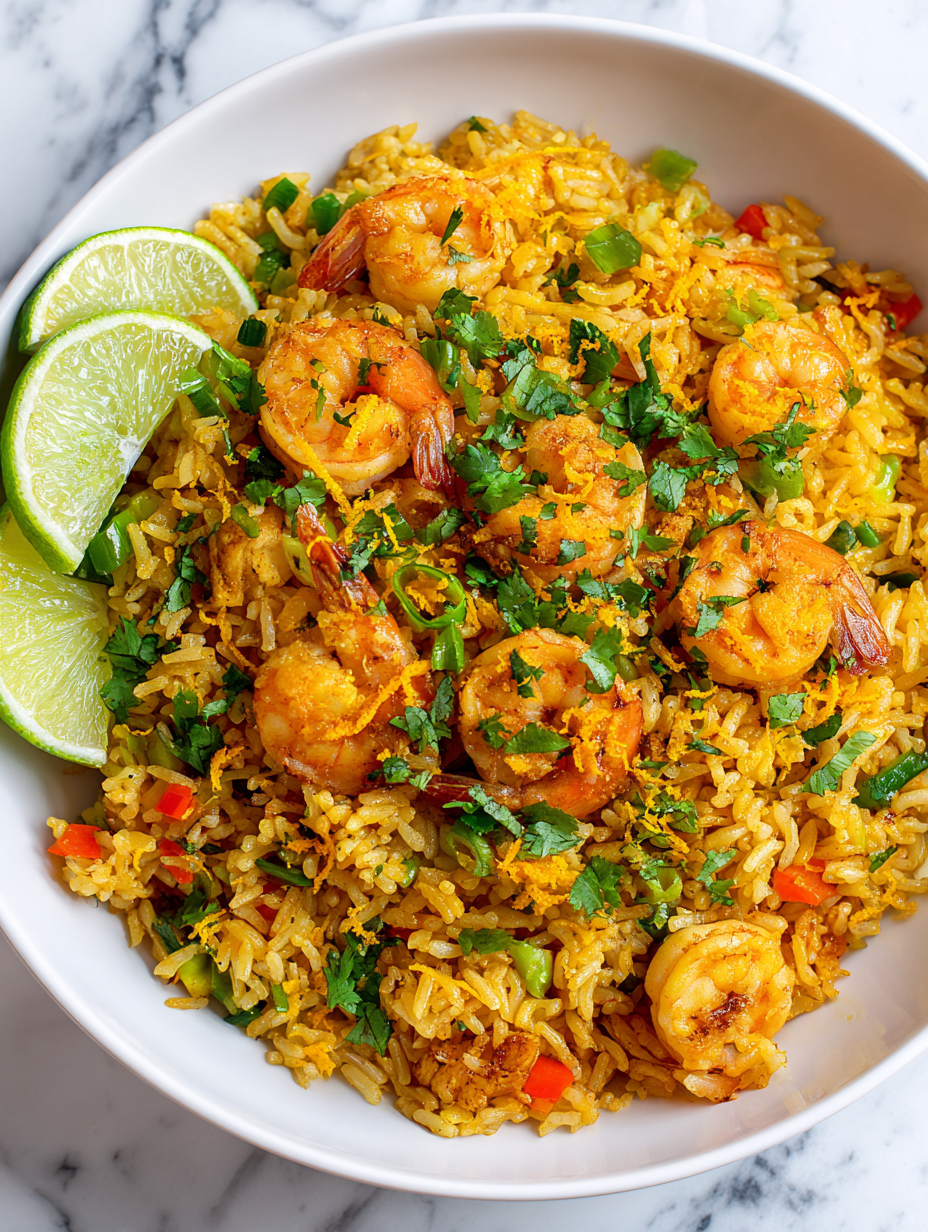
Citrus-Spiced Shrimp Fried Rice
Ingredients
Equipment
Method
- Heat your wok or large skillet over high heat and add a splash of vegetable oil. Once shimmering, toss in the shrimp and cook for 2-3 minutes until they turn pink and develop a slight char. Remove the shrimp and set aside.
- Add a bit more oil to the hot wok, then quickly stir in minced garlic and ginger. Cook for about 15 seconds until fragrant, with aromas filling the air and the mixture turning golden.
- Add the chilled, cooked rice to the wok, breaking up clumps with your spatula. Stir vigorously for 2-3 minutes, pressing the rice against the pan to toast some grains lightly and release a nutty aroma.
- Pour in the soy sauce and toss everything to coat the rice evenly. Continue stirring for another minute, tasting and adjusting the soy if needed; the rice should look glossy and flavorful.
- Reintroduce the cooked shrimp to the wok, stirring to combine and heat through for 1-2 minutes. The shrimp should be hot, opaque, and slightly caramelized at the edges.
- Squeeze fresh lemon juice over the rice and toss quickly to combine, brightening the dish and releasing a citrusy aroma that lifts all the flavors.
- Turn off the heat, then drizzle sesame oil over the rice for a toasted, nutty finish. Garnish with sliced green onions for a fresh, sharp bite, and serve immediately while hot and fragrant.
Notes
Pro tips for perfect shrimp fried rice
- Use high heat to get a good sear and smoky aroma on the shrimp.
- Toss the rice vigorously in the wok to break up clumps and achieve a fluffy texture.
- Add lemon juice at the end to preserve its bright, zesty flavor and prevent bitterness.
- Pre-cook and cool rice thoroughly to prevent it from clumping and becoming mushy during stir-fry.
- Keep ingredients moving quickly in the wok to avoid burning aromatics and overcooking shrimp.
- Drizzle sesame oil off the heat for a nutty aroma that won’t turn bitter or burn.
- Taste and adjust soy and citrus seasoning in stages, aiming for a balanced, vibrant flavor.
Common mistakes and how to fix them
- FORGOT to preheat wok → Always heat wok until shimmering before adding ingredients.
- DUMPED too much soy → Use soy sparingly; too much makes rice overly salty and dark.
- OVER-TORCHED shrimp → Remove shrimp once pink and slightly charred; avoid burning for bitterness.
- MISSED resting time → Let fried rice sit for a minute off heat to meld flavors better.
Quick Fixes for Shrimp Fried Rice
- If rice clumps, splash a little water and toss to loosen grains.
- When shrimp overcooks, rescue by adding a splash of lemon juice for brightness.
- Splash soy sauce when rice is too pale; it adds flavor and color.
- Patch a dry wok with a quick wipe and a splash of oil before next step.
- Shield delicate shrimp from direct heat to prevent over-torching and rubbery texture.
Prep, store, and reheat tips
- Cook the shrimp and rice ahead of time. Store in airtight containers in the fridge for up to 2 days. The rice should be completely cooled to prevent sogginess and maintain texture.
- Pre-chop garlic, ginger, and green onions. Keep them in small containers in the fridge for up to 24 hours. This speeds up assembly and preserves their fresh aroma.
- The fried rice can be made a day in advance, cooled completely, then refrigerated. Reheat in a hot wok or skillet, adding a splash of oil to revive the smoky texture and crackle.
- For best reheating, microwave in short bursts or re-stir-fry until steaming hot and fragrant. The citrus flavor may mellow slightly, so add a squeeze of lemon fresh before serving if needed.
- Leftovers will keep in the fridge for about 2 days. For longer storage, freeze in portions for up to 1 month. Thaw thoroughly before reheating to preserve flavor and texture.
Top questions about shrimp fried rice
1. Can I use frozen shrimp?
Use fresh, large shrimp for best flavor and texture. Frozen shrimp can be used, but thaw thoroughly and pat dry before cooking.
2. Should I use fresh or leftover rice?
Cold, day-old rice is ideal because it’s less sticky and fries up fluffy. Fresh rice tends to clump and soggier.
3. Can I skip lemon juice?
Yes, lemon juice brightens the dish and balances the savory flavors. Add it at the end to preserve its zing.
4. How do I avoid overcooking the shrimp?
Overcooked shrimp turns rubbery and loses flavor. Cook just until pink and slightly charred, then remove from heat promptly.
5. What soy sauce should I use?
Soy sauce adds saltiness and umami. Use light soy for a subtle flavor; dark soy darkens the rice and adds depth.
6. How hot should my wok be?
Preheat your wok until shimmering (around 200°C/390°F). This helps achieve the smoky sear and quick cook needed for fried rice.
7. How do I get fluffy fried rice?
Mix the rice vigorously in the wok to break up clumps. Use a spatula to toss and ensure even frying.
8. When should I add lemon juice?
Add citrus at the end to keep it bright and fresh. Overcooking citrus can dull its zing, so do it just before serving.
9. How long can I keep leftovers?
Store cooked shrimp and rice separately in airtight containers for up to 2 days. Reheat in a hot skillet for best texture.
10. What if my rice or shrimp overcooks?
If rice sticks or clumps, sprinkle a little water and toss. When shrimp becomes rubbery, add a squeeze of lemon to revive flavor.
Cooking this dish reminds me how simple ingredients can come alive with a bit of citrus and heat. It’s one of those recipes that feels like a small celebration, even on busy weeknights. When everything comes together, that smoky shrimp and zesty lemon make each bite stand out.
Honestly, I keep coming back to it because it’s honest, versatile, and just really satisfying. It’s not fancy, but it’s full of flavor and memories of quick, good meals shared with family or friends. Sometimes, that’s exactly what I need after a long day.