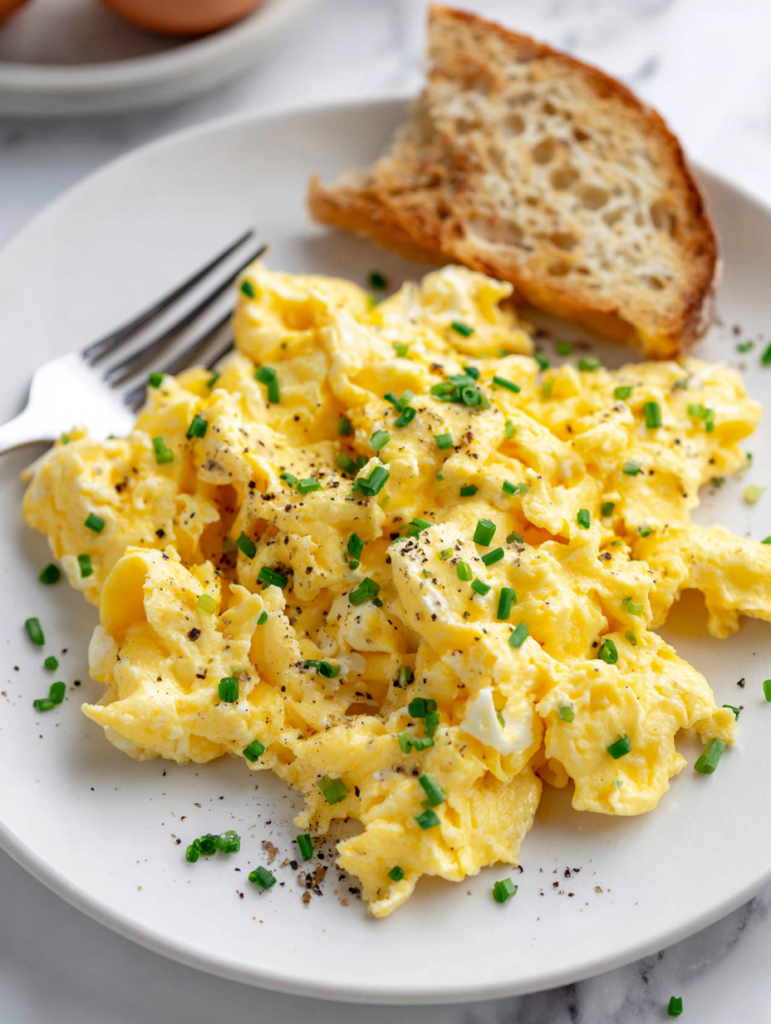
Scrambled eggs often get a bad rap for being bland or overcooked, but I’ve found a way to make them feel like a small act of culinary rebellion. It’s about the technique, the gentle heat, and patience—things that turn a simple breakfast into a moment of quiet pride. When done right, they’re silky, custardy, and almost luxurious, even if you’re just in your pajamas.
This recipe is my go-to when I need a quick, satisfying breakfast that feels like a small victory. It’s a reminder that even the simplest ingredients—eggs, butter, a pinch of salt—can shine with the right touch. Making perfect scrambled eggs isn’t about speed; it’s about respecting the process, and that shift in approach makes all the difference.
Why I Keep Coming Back to This Scrambled Eggs Recipe
These eggs are my refuge on busy mornings, offering comfort and familiarity. The creamy texture and delicate flavor remind me of lazy weekends and quiet mornings. No matter how many variations I try, this method always feels just right—simple, honest, and reliably satisfying. It’s a small ritual that grounds me before the day kicks in full speed.
The Essentials That Make Scrambled Eggs Sing
- Fresh eggs: The foundation of everything—bright, fresh eggs give you that creamy, rich base. If yours are a week old, they’ll be a little tougher to whip to silky perfection, so choose fresh ones when possible.
- Butter: A generous dollop of butter adds richness and helps prevent sticking. Use good quality, unsalted butter; the smell alone when it melts is worth it, and it makes the eggs shimmer.
- Salt: A pinch of salt enhances the eggs’ natural flavor. I like to add it early so it dissolves and distributes evenly, but you can adjust at the end if needed—don’t overdo it.
- Cream or milk (optional): A splash of cream or milk makes the eggs extra tender and adds a slight richness. If you prefer a lighter feel, skip it—your eggs will still be perfect.
- Freshly cracked pepper: A crack of pepper right at the end livens things up with a slight heat and aroma. Freshly ground is best, giving a fragrant burst with each bite.
- Chives or herbs (optional): A sprinkle of chopped herbs adds a fresh, bright note. I often throw in chives, which lend a subtle onion-like aroma—delicious with the creamy eggs.
- Cooking oil or non-stick spray: A quick spray or a drizzle of oil helps keep everything moving smoothly in the pan. Non-stick makes the process less stressful, especially if you’re new to gentle scrambling.
Tools That Turn Ordinary Eggs into a Silky Masterpiece
- Non-stick skillet: The best for gentle, even heat that keeps eggs from sticking and makes stirring easy.
- Heat-resistant spatula: To gently fold and stir without breaking down the eggs, maintaining that soft curd.
- Measuring spoons: For precise addition of salt, cream, or herbs, ensuring balanced flavor.
- Whisk: To beat eggs thoroughly, introducing air for fluffiness, especially if you prefer slightly fluffy eggs.
- Small bowl: For cracking eggs into and beating them before pouring into the skillet, avoiding shell fragments.
- Kitchen towel or paper towels: To wipe spills quickly, keep your workspace tidy, and ensure your tools stay clean.
- Gather your eggs, butter, salt, and any optional ingredients like cream or herbs. Have your tools ready—skillet, spatula, whisk, small bowl.
- Crack the eggs into the small bowl. Whisk thoroughly until the mixture is uniform and slightly frothy, about 15 seconds.
- Heat your skillet over low to medium-low heat, around 120°C (250°F). Add a generous pat of butter, letting it melt slowly and smell nutty.
- Pour in the beaten eggs. Let them sit undisturbed for about 10 seconds, then gently stir with your spatula, pushing from edges to center.
- Continue to stir slowly, folding the eggs over themselves. After about 30 seconds, the eggs should start to form soft curds—jiggly but slightly set.
- If using, add a splash of cream or milk now, stirring gently to incorporate. Season with a pinch of salt and freshly cracked pepper.
- Cook for another 30-60 seconds, stirring gently until the eggs reach a silky, custardy texture. They should be slightly shiny and moist but not runny.
- Remove the skillet from heat just before they’re fully cooked—they’ll finish setting with residual heat. Taste and adjust seasoning if needed.
- Let the eggs rest for a moment in the pan, then transfer to a plate. Garnish with herbs if desired, and serve immediately for best softness.
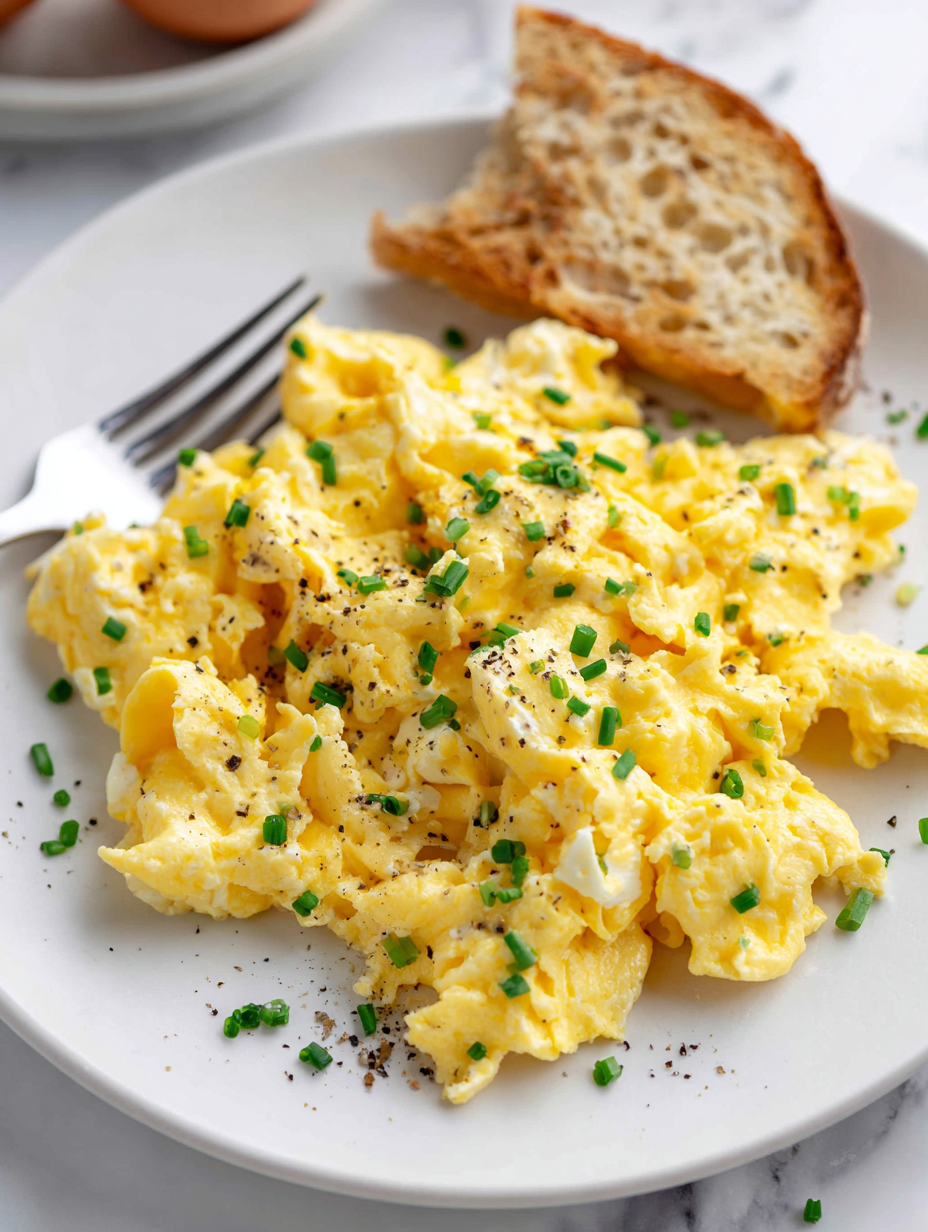
Perfect Silky Scrambled Eggs
Ingredients
Equipment
Method
- Crack the eggs into a small bowl and whisk thoroughly until the mixture is uniform and slightly frothy, about 15 seconds. This introduces air and helps create a fluffy texture.
- Place your non-stick skillet over low to medium-low heat, around 120°C (250°F). Add a generous pat of butter and let it melt slowly, filling the pan with a fragrant, nutty aroma.
- Once the butter is melted and bubbling gently, pour in the beaten eggs. Let them sit undisturbed for about 10 seconds until they just start to set around the edges.
- Gently stir the eggs with your spatula, pushing from the edges toward the center in slow, deliberate motions. This helps form soft curds and prevents overcooking. Continue stirring gently for about 30 seconds, watching for the eggs to become slightly jiggly but starting to set.
- If using, add a splash of cream or milk now, stirring gently to combine. Season with a pinch of salt and freshly cracked pepper to enhance the flavor.
- Continue to stir slowly and patiently for another 30 to 60 seconds, until the eggs are silky, custardy, and just slightly shiny. They should be moist but not runny, with delicate soft curds.
- Remove the skillet from heat just before the eggs are fully set, as residual heat will finish cooking them. Taste and adjust seasoning if needed.
- Garnish with chopped herbs if desired, then serve immediately. The eggs should be creamy, tender, and glossy—perfect for a comforting breakfast.