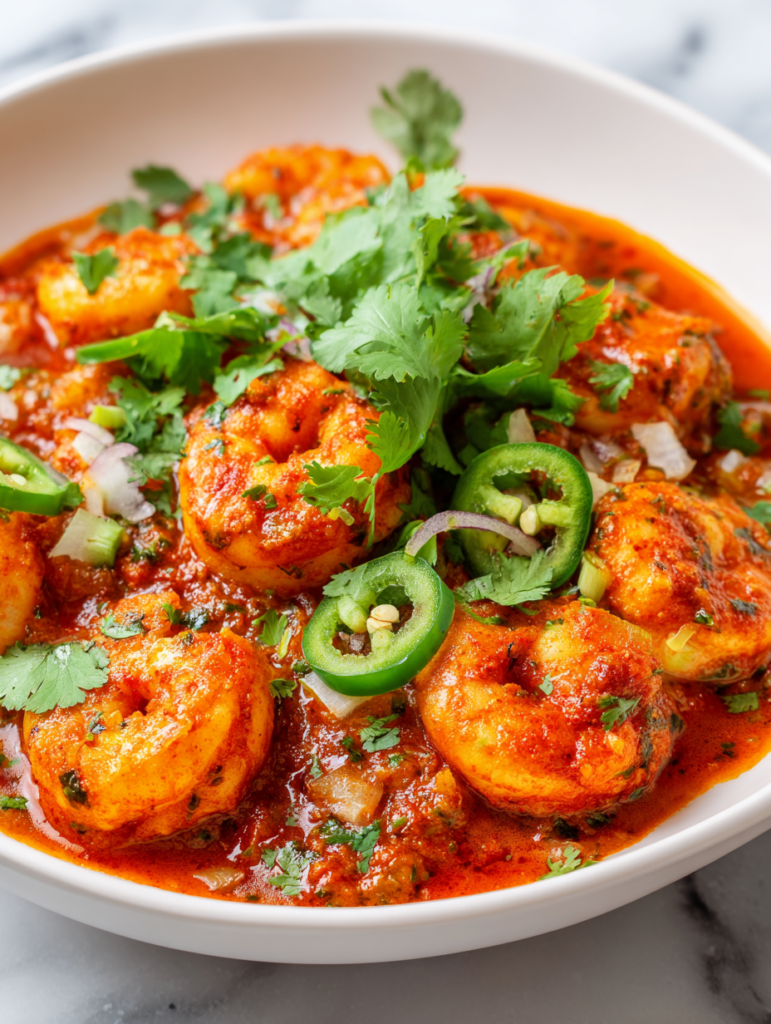
Cooking shrimp masala is like capturing a moment of spice-infused joy. The way shrimp soak up all those aromatic flavors in a quick marinade, then cook just enough to stay tender, makes every bite a little celebration. It’s a dish that proves you don’t need hours in the kitchen to get something deeply satisfying on the table.
What I love most is how the spices cling to the shrimp, almost like a second skin, giving each bite a burst of heat, sweetness, and smoky richness. It’s one of those recipes that feels both familiar and exciting—perfect for when you want something flavorful but don’t want to spend forever fussing over it.
Focusing on how shrimp absorbs spices and flavors uniquely, highlighting the importance of marination and quick cooking to preserve their tender texture and briny sweetness.
The spice of quick marination
- Cooking shrimp masala always reminds me of my grandmother’s kitchen, where the air was thick with cumin and laughter.
- There’s a chaotic thrill in balancing spice levels—sometimes it’s just a pinch too much, but that’s when I learn the most.
- I love how the aroma of simmering tomatoes and spices fills the room, making everyone gather around the stove.
- Every time I make this dish, I feel a rush of pride when the shrimp turn perfectly tender and coated in a glossy, spicy sauce.
- This recipe is my go-to for lazy weekends when I want something soul-warming but quick to pull together.
The story behind this recipe
This shrimp masala recipe is born from a kitchen mishap that turned out better than expected. I was experimenting with quick spice blends to match the brightness of fresh shrimp, and somehow, that rush of aromatic spices stuck with me. It’s become a dish I turn to when I want something vibrant and comforting in a flash. The magic lies in how the shrimp soak up the spices almost instantly, making each bite burst with flavor and a hint of smoky warmth. It’s a reminder that sometimes, the best dishes come from a little chaos and a lot of tasting as you go.
Trivia and history of shrimp masala
- Shrimp masala’s roots trace back to coastal Indian kitchens where seafood was a staple, blending bold spices with fresh catch.
- This dish is a quick adaptation of traditional curry, designed to highlight the briny sweetness of shrimp while keeping cooking times short.
- In some regions, shrimp masala is a festival favorite, prepared in large batches to celebrate community and harvest seasons.
Ingredient breakdown
- Shrimp: I prefer wild-caught, briny shrimp that feel firm and springy—look for a slight sheen. Swap with prawns if needed, but note they’re usually larger and milder in flavor.
- Tomatoes: Ripe, juicy tomatoes give the sauce that rich, tangy backbone. Canned crushed tomatoes work perfectly in a pinch—just pick good-quality ones, they matter.
- Garam Masala: I keep it on hand for that warm, aromatic complexity. If you don’t have it, a pinch of cinnamon, coriander, and cloves can mimic the depth.
- Onions & Garlic: Sauté until golden and fragrant, about 8 minutes. They form the savory base that makes everything taste alive. Skip garlic if you’re sensitive, but it’s worth the extra aroma.
- Ginger: Freshly grated ginger adds a zesty, slightly sweet heat. Dried ginger feels dull in comparison—use fresh for that punch.
- Oil & Spices: I use neutral oil for sautéing, then add spices to bloom. Coconut oil adds a subtle sweetness, but vegetable or sunflower oil works fine.
- Cilantro: Fresh cilantro at the end brightens everything with a citrusy pop. If you’re not a fan, a squeeze of lemon can substitute and keep the dish lively.
Spotlight on key ingredients
Tomatoes:
- Shrimp: I prefer wild-caught, briny shrimp that feel firm and springy—look for a slight sheen. Swap with prawns if needed, but note they’re usually larger and milder in flavor.
- Ripe, juicy tomatoes give the sauce that rich, tangy backbone. Canned crushed tomatoes work perfectly in a pinch—just pick good-quality ones, they matter.
- Garam Masala: I keep it on hand for that warm, aromatic complexity. If you don’t have it, a pinch of cinnamon, coriander, and cloves can mimic the depth.
Ginger & herbs:
- Ginger: Freshly grated ginger adds a zesty, slightly sweet heat. Dried ginger feels dull in comparison—use fresh for that punch.
- Oil & Spices: I use neutral oil for sautéing, then add spices to bloom. Coconut oil adds a subtle sweetness, but vegetable or sunflower oil works fine.
- Cilantro: Fresh cilantro at the end brightens everything with a citrusy pop. If you’re not a fan, a squeeze of lemon can substitute and keep the dish lively.
Notes for ingredient swaps
- Shrimp: I prefer wild-caught, briny shrimp that feel firm and springy—look for a slight sheen. Swap with prawns if needed, but note they’re usually larger and milder in flavor.
- Tomatoes: Ripe, juicy tomatoes give the sauce that rich, tangy backbone. Canned crushed tomatoes work perfectly in a pinch—just pick good-quality ones, they matter.
- Garam Masala: I keep it on hand for that warm, aromatic complexity. If you don’t have it, a pinch of cinnamon, coriander, and cloves can mimic the depth.
- Onions & Garlic: Sauté until golden and fragrant, about 8 minutes. They form the savory base that makes everything taste alive. Skip garlic if you’re sensitive, but it’s worth the extra aroma.
- Ginger: Freshly grated ginger adds a zesty, slightly sweet heat. Dried ginger feels dull in comparison—use fresh for that punch.
- Oil & Spices: I use neutral oil for sautéing, then add spices to bloom. Coconut oil adds a subtle sweetness, but vegetable or sunflower oil works fine.
- Cilantro: Fresh cilantro at the end brightens everything with a citrusy pop. If you’re not a fan, a squeeze of lemon can substitute and keep the dish lively.
Equipment & Tools
- Wide skillet: For even heat distribution and quick stirring.
- Spatula: To stir spices and flip shrimp.
- Knife and chopping board: For prepping onions, garlic, ginger, and herbs.
- Can opener: To open canned tomatoes if using.
Step-by-step guide to shrimp masala
- Equip your pan: Use a wide, heavy-bottomed skillet (about 25cm or 10 inches diameter) to ensure even heat. Have a spatula ready for quick stirring.
- Prepare the shrimp: Peel and devein 500g (about 1 pound) of shrimp. Pat dry with paper towels to remove excess moisture, which helps in even cooking.
- Sauté aromatics: Heat 2 tbsp vegetable oil over medium heat (around 160°C/320°F). Add 1 finely chopped onion and cook until translucent, about 8 minutes. Add 3 minced garlic cloves and 1 tbsp grated ginger, cook until fragrant—about 1 minute.
- Cook spices: Add 1 tbsp garam masala, 1 tsp turmeric, 1 tsp ground coriander, and 1/2 tsp chili powder. Stir constantly for 30 seconds until spices release their aroma and turn a shade darker.
- Add tomato base: Pour in 400g (14 oz) canned crushed tomatoes or fresh chopped ripe tomatoes. Simmer on low heat (around 80°C/175°F) for 8-10 minutes, stirring occasionally. The sauce should thicken slightly and smell rich and smoky.
- Add shrimp: Turn the heat up slightly to medium (around 180°C/355°F). Add the shrimp to the pan. Cook for about 3-4 minutes, turning once, until they turn pink and opaque. Do not overcook, as shrimp become rubbery.
- Finish with herbs: Sprinkle chopped fresh cilantro over the dish. Squeeze a little lemon juice for brightness. Let rest for 2 minutes off heat to meld flavors.
- Serve hot: Plate the shrimp masala with steamed rice or naan. Garnish with extra cilantro if desired. Enjoy the fragrant, spicy warmth.
Let the dish sit off heat for 2 minutes. Finish with cilantro and a squeeze of lemon. Serve directly from the pan or transfer to a warm serving dish. Best enjoyed immediately for the freshest flavor and texture.
How to Know It’s Done
- Shrimp turn pink and opaque, not grey.
- Sauce is thick, fragrant, and tomato-rich.
- Aromatics smell deeply spicy, not burnt or raw.
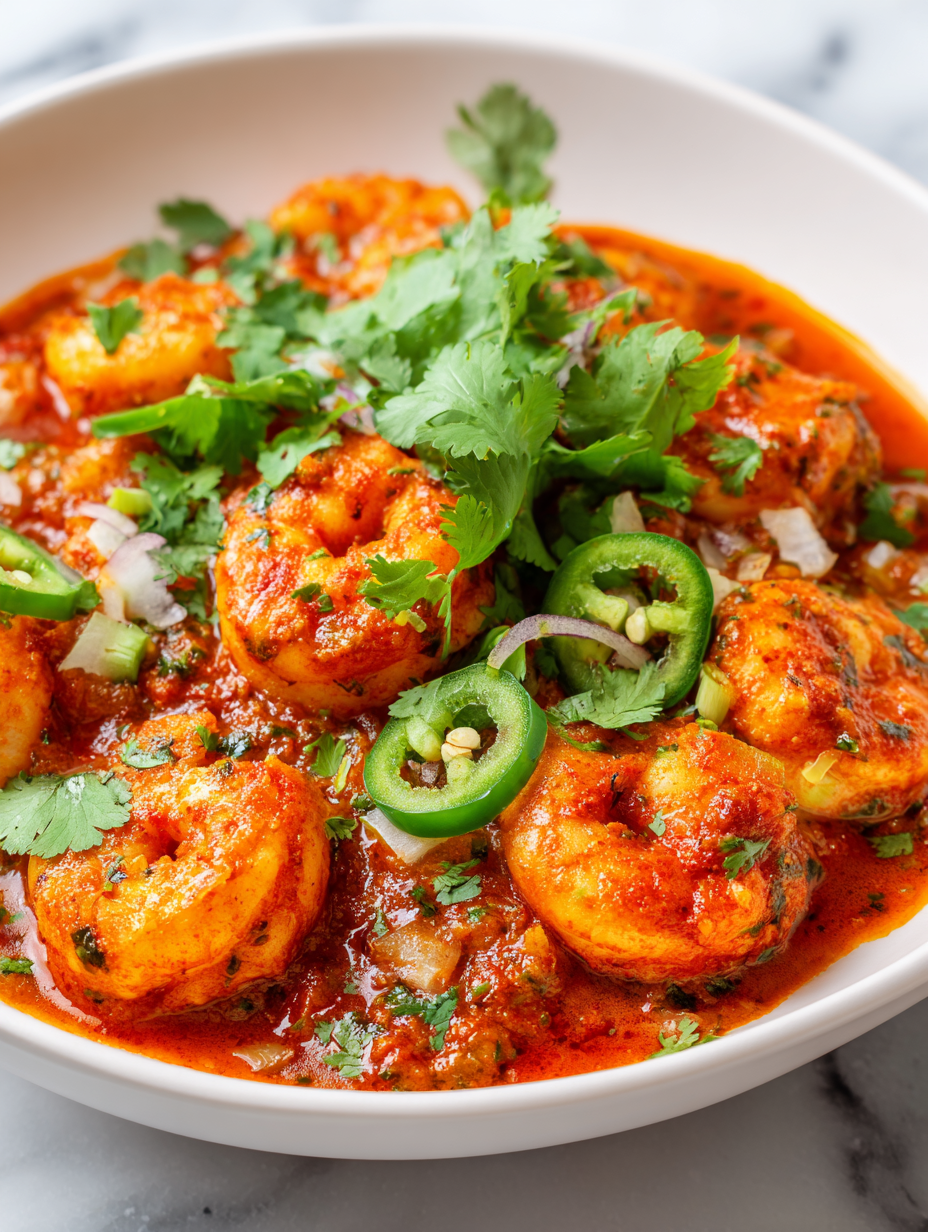
Shrimp Masala
Ingredients
Equipment
Method
- Heat a wide skillet over medium heat and add vegetable oil. Once shimmering, add the finely chopped onion and sauté until translucent and golden, about 8 minutes, filling the kitchen with a sweet, caramelized aroma.
- Add minced garlic and grated ginger to the skillet. Stir constantly for about 1 minute until fragrant, with the mixture bubbling gently and filling the air with a spicy aroma.
- Sprinkle in the garam masala, turmeric, ground coriander, and chili powder. Stir well to coat the aromatics and cook for 30 seconds until the spices release their aroma and darken slightly, creating a fragrant base.
- Pour in the crushed tomatoes, stirring to combine with the spice mixture. Reduce the heat to low and let the sauce simmer gently for 8-10 minutes, until it thickens slightly and develops a rich, smoky aroma.
- Increase the heat to medium and add the shrimp to the skillet. Cook for about 3-4 minutes, turning once, until the shrimp turn pink, opaque, and are just cooked through. The sauce should shimmer and cling to each piece.
- Sprinkle chopped cilantro over the dish and squeeze fresh lemon juice if desired. Give everything a gentle stir, letting the flavors meld for a minute off the heat, filling the air with vibrant spice and citrus aromas.
- Serve immediately with steamed rice or naan, enjoying the glossy, fragrant sauce and tender shrimp in every bite.
Notes
Pro tips for flavorful shrimp masala
- Bolded tip: Use a wide skillet to ensure even heat distribution, preventing shrimp from overcooking in spots.
- Bolded tip: Add spices to hot oil and cook for 30 seconds—this releases their full aroma and flavor.
- Bolded tip: Cook shrimp just until they turn pink and opaque—about 3-4 minutes—overcooking makes them rubbery.
- Bolded tip: For a smoky depth, toast garam masala in the pan before adding liquids, but watch carefully to avoid burning.
- Bolded tip: Finish with fresh cilantro and a squeeze of lemon immediately to preserve brightness and freshness.
Common mistakes and how to fix them
- FORGOT to preheat the pan → Always heat oil before adding aromatics.
- DUMPED all spices at once → Bloom spices in oil for better flavor release.
- OVER-TORCHED garlic → Sauté garlic gently until fragrant, not browned to bitter.
- UNDERESTIMATED shrimp cooking time → Turn pink and opaque, about 3-4 minutes, avoid overcooking.
Quick fixes and pantry swaps
- When sauce is too thin → Splash in a bit of coconut milk to thicken and add richness.
- If shrimp are overcooked → Patch with a quick squeeze of lemon and fresh cilantro to refresh flavor.
- Dumped too many spices → Shield with a splash of plain yogurt to mellow heat and balance flavors.
- When sauce lacks brightness → Open a jar of pickled ginger for an instant zing and aroma boost.
- If shrimp smell fishy → Rescue with a quick rinse and a pinch of lemon zest in the cooking process.
Prep, store, and reheat tips
- Peel and devein the shrimp ahead of time; store in an airtight container for up to 1 day in the fridge. Their briny aroma will deepen overnight.
- Prepare the spice base and tomato sauce up to 2 days in advance. Keep refrigerated in a sealed jar; flavors meld and intensify, making reheating even more fragrant.
- Reheat gently on low heat, stirring occasionally. The sauce should shimmer and smell vibrant—add a splash of water if it thickens too much.
- Cook the shrimp fresh when ready to serve for the best tender texture. Reheated shrimp can become rubbery if overcooked, so add them at the last moment.
Top questions about shrimp masala
1. How do I choose the best shrimp for this dish?
Fresh shrimp should smell briny and clean, not fishy or sour. The flesh should feel firm and springy to the touch.
2. Can I use canned tomatoes instead of fresh?
Use ripe, juicy tomatoes or high-quality canned crushed tomatoes for a rich, tangy sauce. Fresh ones add brightness, canned ones are convenient.
3. How do I know when the shrimp are perfectly cooked?
Cook shrimp just until they turn pink and opaque, about 3-4 minutes. Overcooking makes them rubbery and tough.
4. When should I add the spices during cooking?
Add spices to hot oil and cook for about 30 seconds to release their aroma. Blooming spices enhances flavor and depth.
5. Why is it important to add cilantro and lemon at the end?
Finish with fresh cilantro and lemon juice immediately after cooking to keep the dish bright and fragrant.
6. How should I reheat leftovers without losing flavor?
Reheat gently over low heat, stirring occasionally. The sauce should shimmer and smell vibrant, with a bit of steam rising.
7. What if my sauce is too watery?
If the sauce is too thin, stir in a small spoon of coconut milk or let it simmer longer until thickened.
8. How do I prevent garlic from burning?
Avoid burning garlic by sautéing it gently until fragrant, about 1 minute, not browned or bitter.
9. How can I avoid rubbery shrimp?
To prevent overcooking shrimp, add them at the end and cook for only a few minutes until pink and firm.
10. What’s the best pan for making shrimp masala?
Use a wide skillet for even heat distribution and quick stirring, which helps keep shrimp tender and sauce flavorful.
Cooking this shrimp masala is a reminder that simple ingredients, when treated with care, can deliver bold, comforting flavors. The aroma of spices and the tender, briny shrimp make every bite feel like a small celebration of flavor.
It’s a dish that feels both spontaneous and satisfying, perfect for those nights when you want something warm and vibrant without fuss. Each time I make it, I’m reminded how quick and rewarding good, honest cooking can be.