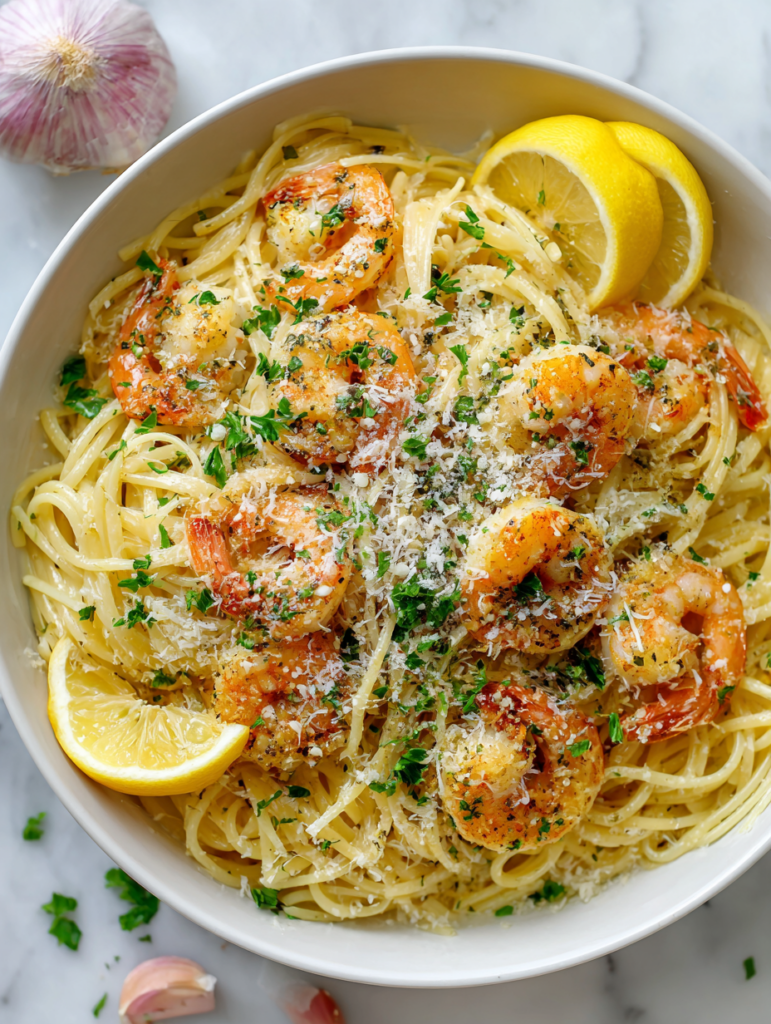
This shrimp garlic Parmesan pasta is my go-to when I want something impressive but simple. The secret is in the crispy, garlic-infused shrimp that add a punch of flavor and texture. Then, creamy Parmesan noodles bring everything together in a cozy, satisfying way.
What I love about this dish is how it balances bold, savory seafood with rich, cheesy pasta. It’s like a little celebration of contrasting textures—crunchy shrimp against silky noodles. Plus, it’s adaptable: add a squeeze of lemon or a sprinkle of herbs, and suddenly it feels fresh and bright.
Focusing on the unexpected pairing of crispy, garlic-infused shrimp with creamy Parmesan pasta, this recipe turns a simple dish into a textural adventure, highlighting the contrast between tender seafood and rich, cheesy noodles.
Unexpected Texture Twists
- I remember the first time I made this dish — the aroma of garlic and shrimp filled the kitchen and made everyone gather around.
- There’s a quiet pride in mastering the crispy shrimp without burning the garlic—it’s all about timing and patience.
- This recipe reminds me of summer nights, eating it out on the porch, the smell of Parmesan mingling with fresh air.
- The creamy noodles hiding that perfect, tender bite of shrimp always feels like a small victory after a busy day.
- Honestly, it’s the kind of meal that turns an ordinary weeknight into a little celebration with just a few simple ingredients.
The spark behind this dish
- This dish started as a way to use up a bag of frozen shrimp on a busy weeknight. I wanted something quick but with a punch of flavor, and crispy garlic shrimp just seemed like the perfect contrast to creamy pasta. I remember the first time I added a squeeze of lemon at the end—lifted everything and made it feel fresh and bright.
- It’s become a little ritual in my kitchen—frying shrimp until crispy, the garlic scent filling the air, then tossing everything together. The combination of textures and flavors keeps surprising me, and it’s incredibly satisfying to serve something that tastes fancy but is really just a few pantry staples.
- heading: ‘The spark behind this dish’
Trivia and historical tidbits
- This dish merges Italian pasta traditions with the seafood-rich coastal flavors of the American South, reflecting a fusion of culinary worlds.
- The use of Parmesan in pasta dates back centuries, but pairing it with crispy garlic shrimp is a modern twist that’s gained popularity in home kitchens.
- In some coastal regions, similar recipes surfaced as quick, satisfying meals for fishermen and their families, combining fresh seafood with pantry staples.
- The crispy shrimp element was inspired by street food stalls in Louisiana, where seafood is often fried with bold garlic and spice notes.
- This recipe’s popularity surged during the pandemic, as home cooks sought comfort foods that felt indulgent yet straightforward to prepare.
Key ingredients and tips
- Shrimp: I prefer large, peeled shrimp for a meaty bite—look for ones that still smell faintly of the sea, not fishy. If your shrimp smell off, skip them, no amount of garlic will fix that fishy tone.
- Garlic: I use a generous amount of minced garlic—the aroma should turn fragrant and slightly nutty when sizzling. If you want a subtler flavor, reduce the garlic, but don’t skip it entirely; it’s the backbone of the dish’s warmth.
- Parmesan: Freshly grated Parmesan melts better and has that bright, salty punch. Store-bought shredded can be a bit dull; if you only have pre-grated, just grate more for a more vibrant flavor.
- Pasta: I love using linguine or fettuccine—something that holds onto the sauce. Cook it until just al dente, so it’s still firm with a slight chew, not mushy. The starchy pasta water is key for the sauce’s silkiness.
- Olive oil: Use a good-quality extra virgin; it adds a fruity richness. When heating, the oil should shimmer but not smoke—if it does, turn down the heat to prevent burnt garlic and a bitter taste.
- Lemon (optional): A squeeze of lemon at the end brightens everything up—look for a lemon that’s heavy and fragrant. If you skip it, the dish feels a bit heavier, so consider a splash of white wine instead.
- Salt & pepper: Season early and often—shrimp and pasta need a good salt sprinkle during cooking. Freshly cracked black pepper adds a subtle heat—don’t skimp, but keep it balanced.
Spotlight on key ingredients
Shrimp:
- I prefer large, peeled shrimp for a meaty bite—look for ones that still smell faintly of the sea, not fishy. If your shrimp smell off, skip them, no amount of garlic will fix that fishy tone.
- Garlic: I use a generous amount of minced garlic—the aroma should turn fragrant and slightly nutty when sizzling. If you want a subtler flavor, reduce the garlic, but don’t skip it entirely; it’s the backbone of the dish’s warmth.
Parmesan:
- Freshly grated Parmesan melts better and has that bright, salty punch. Store-bought shredded can be a bit dull; if you only have pre-grated, just grate more for a more vibrant flavor.
- Pasta: I love using linguine or fettuccine—something that holds onto the sauce. Cook it until just al dente, so it’s still firm with a slight chew, not mushy. The starchy pasta water is key for the sauce’s silkiness.
Notes for ingredient swaps
- Dairy-Free: Swap Parmesan for nutritional yeast or a dairy-free cheese alternative. It won’t have the same nutty richness but still adds umami.
- Shellfish-Free: Use firm tofu or chicken strips instead of shrimp. Keep in mind, the texture will be different, but it absorbs garlic and Parmesan nicely.
- Gluten-Free: Replace regular pasta with rice noodles or gluten-free pasta. The flavor stays the same, but watch for overcooking since gluten-free can go mushy quickly.
- Vegan: Omit Parmesan or substitute with vegan Parmesan or ground cashews for creaminess. The garlic and seasoning still shine through.
- Oil: Use avocado oil or light sesame oil if olive oil isn’t available. They add different flavor notes but work well at high heat.
- Lemon: If you don’t have fresh, a splash of bottled lemon juice works, but it’s less vibrant. Fresh lemon zest is even better for brightness.
- Herbs: Fresh parsley or basil is perfect, but dried herbs like oregano or thyme can be used if fresh isn’t at hand. Adjust quantities since dried is more concentrated.
Equipment & Tools
- Large skillet: For searing shrimp and making the sauce.
- Slotted spoon: To remove shrimp without excess oil.
- Pot for pasta: To cook noodles evenly.
- Fine grater: For freshly grating Parmesan.
Step-by-step guide to shrimp pasta
- Equipment & Tools: Gather a large skillet (preferably non-stick), a slotted spoon for shrimp, a pot for pasta, and a fine grater for Parmesan.
- Cook pasta: Bring a large pot of salted water (about 1 tbsp salt) to a boil at 100°C/212°F. Add pasta and cook until just al dente, about 8 minutes. Reserve ½ cup pasta water, then drain and set aside.
- Prepare shrimp: Pat shrimp dry. Season lightly with salt and pepper. Heat a tablespoon of olive oil in the skillet over medium-high heat (around 180°C/350°F).
- Cook shrimp: Add shrimp in a single layer. Sear for 2-3 minutes per side until golden and crispy. Turn once, then remove with a slotted spoon and set aside. If garlic begins to burn, lower heat slightly.
- Make garlic oil: In the same skillet, add a little more olive oil if needed. Sauté 4-6 minced garlic cloves for 30 seconds until fragrant but not browned—if it turns dark, start over with fresh garlic to avoid bitterness.
- Build the sauce: Reduce heat to medium. Add reserved pasta water (about ¼ cup), a handful of grated Parmesan, and a squeeze of lemon if using. Stir until smooth and creamy, about 1 minute.
- Combine everything: Toss cooked pasta into the skillet with the sauce. Add shrimp back in. Stir gently to coat. Adjust seasoning with salt and pepper. The sauce should cling to the noodles and shrimp.
- Finish & plate: Serve immediately, garnished with extra Parmesan and freshly chopped parsley if desired. Rest for 1 minute before digging in—this helps the flavors settle.
- Check doneness: The shrimp should be crispy and opaque, pasta al dente with a slight chew, and the sauce silky and coats the noodles evenly.
Serve immediately, garnished with extra Parmesan and herbs if desired. Let sit for a minute to let flavors meld before plating.
How to Know It’s Done
- Shrimp: crispy, opaque, and golden brown.
- Pasta: firm, with a slight bite (al dente).
- Sauce: smooth, glossy, and coats noodles without pooling.
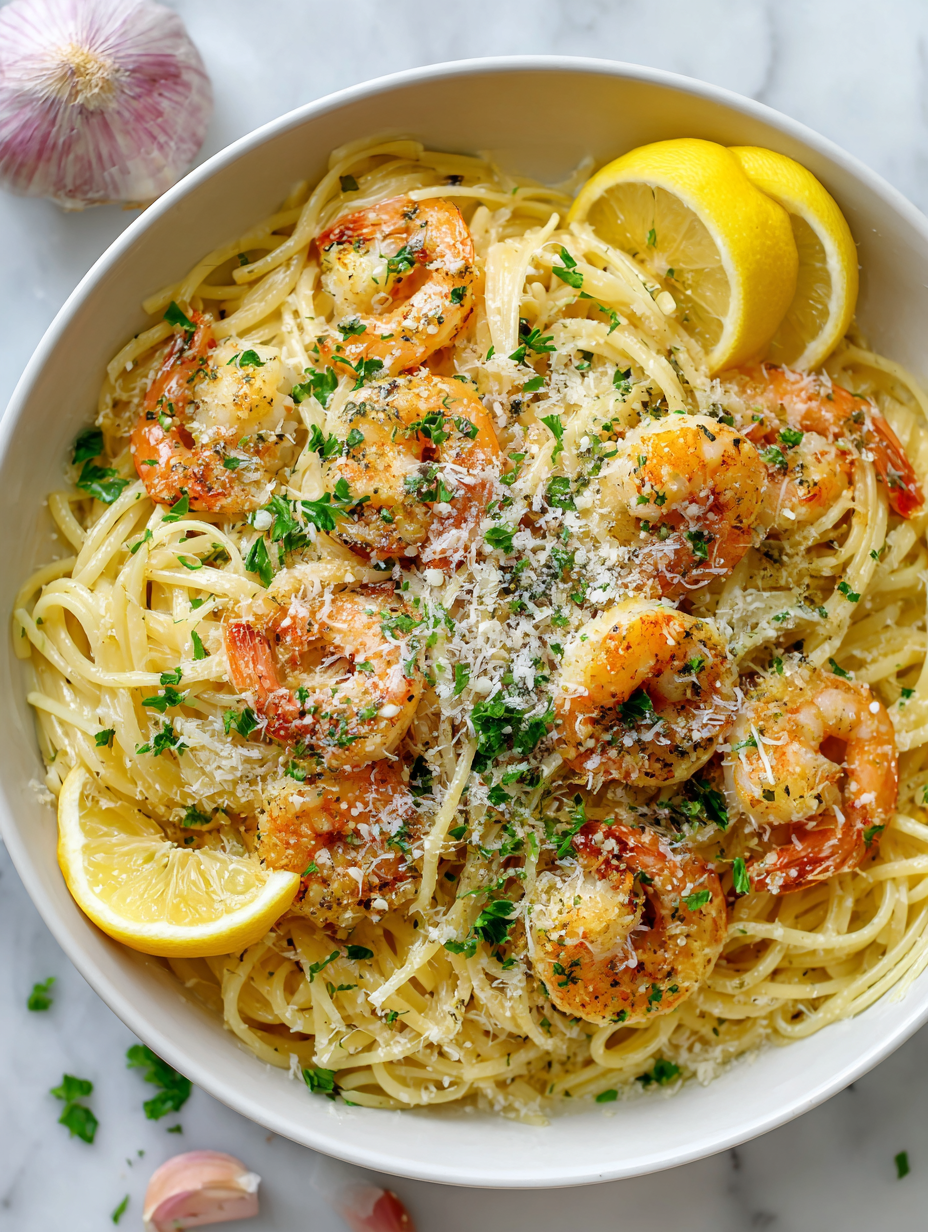
Shrimp Garlic Parmesan Pasta
Ingredients
Equipment
Method
- Bring a large pot of salted water to a boil, then cook the pasta until just al dente, about 8 minutes. Reserve ½ cup of pasta water, then drain and set aside.
- Pat the shrimp dry and season lightly with salt and pepper. Heat 1 tablespoon of olive oil in a large skillet over medium-high heat until shimmering.
- Add the shrimp in a single layer and sear for 2-3 minutes per side, until golden and crispy. Use a slotted spoon to remove the shrimp and set aside.
- In the same skillet, add the remaining 2 tablespoons of olive oil and sauté the minced garlic over medium heat for about 30 seconds until fragrant and lightly nutty, being careful not to burn it.
- Pour in the reserved pasta water and stir, allowing it to reduce slightly. Add the grated Parmesan and stir until the sauce is smooth and creamy.
- Drop the cooked pasta into the skillet and toss gently to coat in the cheese sauce. Return the crispy shrimp to the skillet and mix everything together evenly.
- Squeeze fresh lemon juice over the pasta, if desired, and season with additional salt and freshly cracked pepper to taste. Toss once more to distribute the flavors.
- Serve immediately, garnished with extra Parmesan and chopped herbs if you like. Enjoy the crispy, cheesy, and flavorful shrimp pasta while hot.
Pro tips for perfect shrimp pasta
- Use high heat for shrimp—listen for a quick crackle and golden edges.
- Sauté garlic just until fragrant—if it turns brown, start over to avoid bitterness.
- Reserve pasta water—its starchy richness helps the sauce cling perfectly.
- Pat shrimp dry before cooking—moisture prevents crispiness and causes splatters.
- Grate Parmesan fresh—pre-shredded melts less smoothly and can taste dull.
- Toss pasta in sauce off heat—this prevents overcooking and keeps sauce silky.
- Finish with a squeeze of lemon—brightens flavors and enhances that cheesy, garlicky punch.
Common mistakes and how to fix them
- FORGOT to pat shrimp dry → Shrimp can be watery, pat dry for crispiness.
- DUMPED all garlic at once → Add garlic gradually, watch for burning and adjust heat.
- OVER-TORCHED shrimp → Keep heat moderate, cook shrimp until just golden, not dark.
- SKIPPED pasta water → Reserve pasta water for sauce, it’s key for silkiness.
Quick fixes and pantry swaps
- When shrimp are soggy, splash them with lemon juice and re-sauté for 30 seconds.
- If pasta clumps, toss with a splash of hot pasta water to loosen the sauce.
- DUMPED all garlic at once? Patch by adding more garlic later for a fresh burst.
- Over-torched garlic? Shield it with a spoonful of butter to mellow the bitterness.
- Splash extra Parmesan if sauce feels thin—its salty richness will deepen the flavor.
Prep, store, and reheat tips
- Cook the pasta and shrimp separately ahead of time—store in airtight containers in the fridge for up to 2 days. The aroma of garlic and Parmesan will intensify slightly overnight.
- Refrigerate the cooked pasta and shrimp in separate containers. When ready to serve, reheat gently to preserve texture and flavor, aiming for a warm but not boiling temperature—about 30 seconds in the microwave, covered, with a pinch of water for moisture.
- The flavors deepen overnight, especially the garlic and Parmesan. Expect the sauce to thicken slightly; stir in a splash of hot pasta water or broth to loosen it before serving again.
- For longer storage, freeze the cooked shrimp and pasta separately for up to 1 month. Thaw in the fridge overnight, then reheat carefully, watching for overcooking or losing that crispy shrimp texture.
- Reheating will intensify the garlic aroma and Parmesan saltiness. The pasta may cling a bit more, so add a splash of warm water or broth when reheating to revive the sauce’s creaminess.
Top questions about shrimp pasta
1. How do I choose the best shrimp?
Use large, fresh or thawed shrimp that smell like the sea. Faintly briny and firm to the touch.
2. How long should I cook the pasta?
Cook pasta al dente, about 8 minutes in salted boiling water. It should be firm but tender.
3. How do I get crispy shrimp?
Sear shrimp over medium-high heat until golden and crispy, about 2-3 minutes per side. Don’t overcrowd the pan.
4. When do I add the garlic?
Add minced garlic just until fragrant, about 30 seconds. If it browns, start over to avoid bitterness.
5. Why save pasta water?
Reserve some pasta water before draining. It’s starchy and helps thicken and coat the sauce.
6. How do I keep the sauce creamy?
Toss pasta with sauce off the heat to prevent overcooking and keep it silky and smooth.
7. Should I grate my own Parmesan?
Use freshly grated Parmesan for better melting and flavor. It adds a nutty, salty punch.
8. How do I reheat this dish?
Reheat leftovers gently in the microwave or on the stove, adding a splash of water to loosen the sauce.
9. Can I skip the lemon?
Add a squeeze of lemon at the end for brightness. It lifts the richness and enhances the flavors.
10. How soon should I serve after cooking?
Serve immediately for the best texture—shrimp should be crispy and pasta still silky.
This dish isn’t just about quick comfort food; it’s about capturing that perfect crispy shrimp bite with every forkful. The aroma of garlic and Parmesan, combined with the tender pasta, makes every bite feel indulgent, even on a weeknight.
In times when I need something satisfying yet straightforward, this pasta always comes through. It’s a little reminder that simple ingredients, treated with care, can turn into something memorable to share or keep for myself.