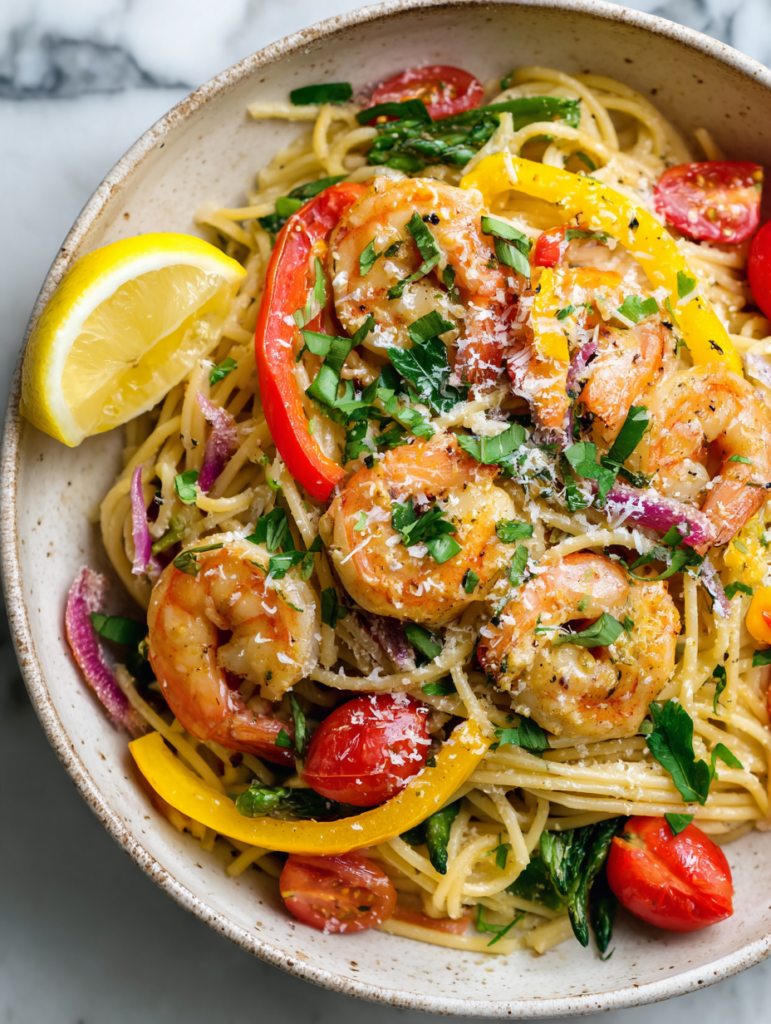
Spring’s here, and I can’t help but get excited about the burst of colors and flavors it brings. This shrimp pasta primavera is my go-to when I want something lively on the plate, full of fresh vegetables and bright notes. It’s like a little garden party in every bite, even if I’m just cooking for myself on a busy weeknight.
What I love most is how quick it comes together — a handful of ingredients, a little chop, and a few minutes of sautéing. The aroma of garlic, lemon zest, and sizzling shrimp fills the kitchen, making it impossible to wait. Plus, that vibrant mix of peppers, zucchini, and cherry tomatoes adds a pop of color and freshness that lifts my mood instantly.
This dish reminds me that good, honest ingredients can turn a simple pasta into something special. It’s not about fuss or fancy techniques, but about celebrating what’s in season and making the most of it. Sometimes, the simplest meals are the most memorable, especially when they taste like a springtime stroll in a bustling garden.
Focusing on how the vibrant colors and fresh flavors of spring vegetables can transform a simple shrimp pasta into a celebration of seasonal produce, making each bite feel like a crisp walk through a garden in bloom.
A splash of spring on a plate
- This dish reminds me of lazy spring afternoons, the aroma of fresh vegetables mingling with the sea-salty shrimp.
- Cooking this always feels like a small celebration, bright colors and lively flavors coming together in one pan.
- There’s a quiet pride in turning simple, seasonal ingredients into something that feels both comforting and vibrant.
- Sharing this with friends always sparks smiles — it’s a dish that feels like a warm, edible hug.
- Every time I make it, I’m reminded how quick, fresh, and satisfying a meal can be when you keep it simple.
A splash of spring on a plate
This recipe came about on a busy spring evening when I needed something quick, colorful, and satisfying. I had a handful of fresh vegetables and some shrimp that needed using up, and I wanted to avoid the usual heavy pasta dishes. It turned into a spontaneous celebration of seasonal produce and simple techniques, reminding me that fresh ingredients can really shine without too much fuss. Now, it’s become a go-to when I want a vibrant, lively meal that feels like a little garden in every bite.
Historical and Cultural Notes
- Shrimp Pasta Primavera has roots in Italian-American comfort food, evolving in the 20th century to celebrate seasonal vegetables.
- The dish gained popularity in the 1970s as a fresh, healthful alternative to traditional pasta recipes, emphasizing spring produce.
- Its vibrant colors and light flavors mirror the rise of health-conscious eating and a love for bright, vegetable-forward dishes.
- Originally, early versions used more butter and cream; modern twists focus on olive oil and fresh herbs for a lighter touch.
- Many home cooks see it as a symbol of spring renewal, making it a favorite for seasonal family dinners and gatherings.
Key Ingredients and Tips
- Shrimp: I prefer the firm, slightly sweet bite of deveined, peeled shrimp; it’s juicy and cooks quickly. Swap for scallops if you want a richer feel, but keep an eye on their delicate texture.
- Spring vegetables: Bright bell peppers and zucchini give this dish its cheerful color and crunch. Feel free to add snap peas or asparagus for more spring freshness. Their crisp bite contrasts beautifully with pasta.
- Olive oil: I use a good extra virgin for that fruity depth and smoky aroma; it’s the base of flavor here. If you want a lighter touch, substitute with avocado oil, but you might lose some depth.
- Garlic: I love the pungent, almost sweet aroma when it hits hot oil—make sure not to burn it. For a milder profile, try shallots or scallions, but garlic really makes the dish pop.
- Lemon: Bright, zesty, and essential. Zest first and then squeeze for that fresh, citrus punch. Lime works if lemon’s not available, but lemon is classic here.
- Cherry tomatoes: Juicy, burst-in-mouth sweetness. For a smoky note, roast them first or char them briefly in the pan. Skip if you prefer a more subdued flavor.
- Pasta: Long, thin spaghetti or linguine works best—its surface holds the sauce nicely. Whole wheat adds nutty flavor if you’re into that, but traditional pasta keeps it simple.
Spotlight on Shrimp and Tomatoes
Shrimp:
- Juicy, slightly sweet, with a firm texture that responds beautifully to quick searing. They turn opaque and pink quickly, so don’t overcook.
- Cherry tomatoes: Bursting with sweetness and acidity, they soften and release their juices, adding bright flavor and a bit of natural sauce to the dish. Their skins blister and char slightly, enhancing their flavor.
Cherry tomatoes:
- Juicy, burst-in-mouth sweetness that caramelizes slightly when sautéed, adding vibrant color and a fresh punch. They soften quickly, so add them last to preserve their shape.
- Their skins blister and char in the pan, which intensifies their flavor and adds a smoky note that balances the dish’s brightness.
Notes for ingredient swaps
- Seafood-Free: Use firm tofu or tempeh slices. They soak up flavors well and keep the dish vegetarian-friendly, though the texture is less juicy and tender.
- Gluten-Free: Swap regular pasta for rice noodles or gluten-free penne. Be mindful of cooking times; rice noodles can overcook quickly and become mushy.
- Vegan: Replace shrimp with sautéed mushrooms or marinated jackfruit. Use olive oil instead of butter if the recipe calls for it, maintaining the savory profile.
- Creaminess: Omit or reduce olive oil, and add a splash of coconut milk or cashew cream at the end for a richer, dairy-free sauce. Expect a slightly sweeter note.
- Citrus: Lemon can be swapped for lime or orange zest for a different zing. Lime adds a sharper, more tangy brightness, while orange offers a sweeter, mellow tone.
- Vegetables: Feel free to toss in snap peas, asparagus, or artichoke hearts. Keep in mind they vary in cooking time; snap peas are quick, while artichokes need longer.
- Herbs: Basil is classic, but parsley, chives, or cilantro can bring a fresh twist. Fresh herbs are best added at the end to preserve their vibrant flavor.
Equipment & Tools
- Large skillet: To cook shrimp and vegetables evenly.
- Pasta pot: Boiling and draining pasta efficiently.
- Tongs: Handling and tossing ingredients without breaking them.
- Slotted spoon: Removing shrimp and vegetables from the pan.
Step-by-step guide to Shrimp Pasta Primavera
- Gather all your equipment: a large skillet (preferably non-stick), tongs, a slotted spoon, and a pasta pot. Boil water with a generous pinch of salt, then cook the pasta until al dente—about 8-10 minutes at 100°C / 212°F. Drain, but save a cup of pasta water.
- While pasta cooks, prep your veggies: julienne the bell peppers and zucchini, halve cherry tomatoes, and mince 3 cloves of garlic. Pat the shrimp dry with paper towels—this helps them sear better.
- Heat the skillet over medium-high heat (around 190°C / 375°F). Add 2 tbsp olive oil. Once shimmering, toss in the garlic. Sauté for 30 seconds until fragrant—your kitchen will fill with that savory, pungent aroma. If it burns, turn down the heat.
- Add the shrimp in a single layer. Cook for 2-3 minutes per side, until they turn pink and opaque, with a slight caramel edge. Shake the pan gently to prevent sticking. Remove shrimp and set aside.
- In the same pan, add a splash more olive oil if needed. Toss in your peppers and zucchini. Sauté for about 3-4 minutes, stirring frequently, until vegetables are just tender but still crisp. Add a pinch of salt and black pepper. The vegetables should be vibrant and slightly blistered around the edges.
- Return the shrimp to the pan. Add the cherry tomatoes and a squeeze of fresh lemon juice. Cook everything together for another 2 minutes, just until tomatoes soften and release their juice, creating a light sauce. Check seasoning and adjust with salt or lemon as needed.
- Add the drained pasta to the skillet. Toss everything together, adding reserved pasta water a splash at a time to loosen the sauce and help it cling to the noodles. Cook for another 1-2 minutes to meld flavors; the pasta should look glossy and well-coated.
- Finish with a sprinkle of fresh herbs if you like—basil or parsley work well. Let it rest off heat for a minute or two, allowing flavors to settle. Plate generously, aiming for a colorful, vibrant presentation.
Let the dish rest for a minute after plating. Finish with a squeeze of lemon or a drizzle of olive oil to brighten flavors. Serve immediately with a side of crusty bread if desired.
How to Know It’s Done
- Shrimp are opaque and slightly firm, with a pink hue.
- Vegetables are tender yet still crisp, and colorful.
- Pasta is coated in a light, glistening sauce, not sticky or dry.
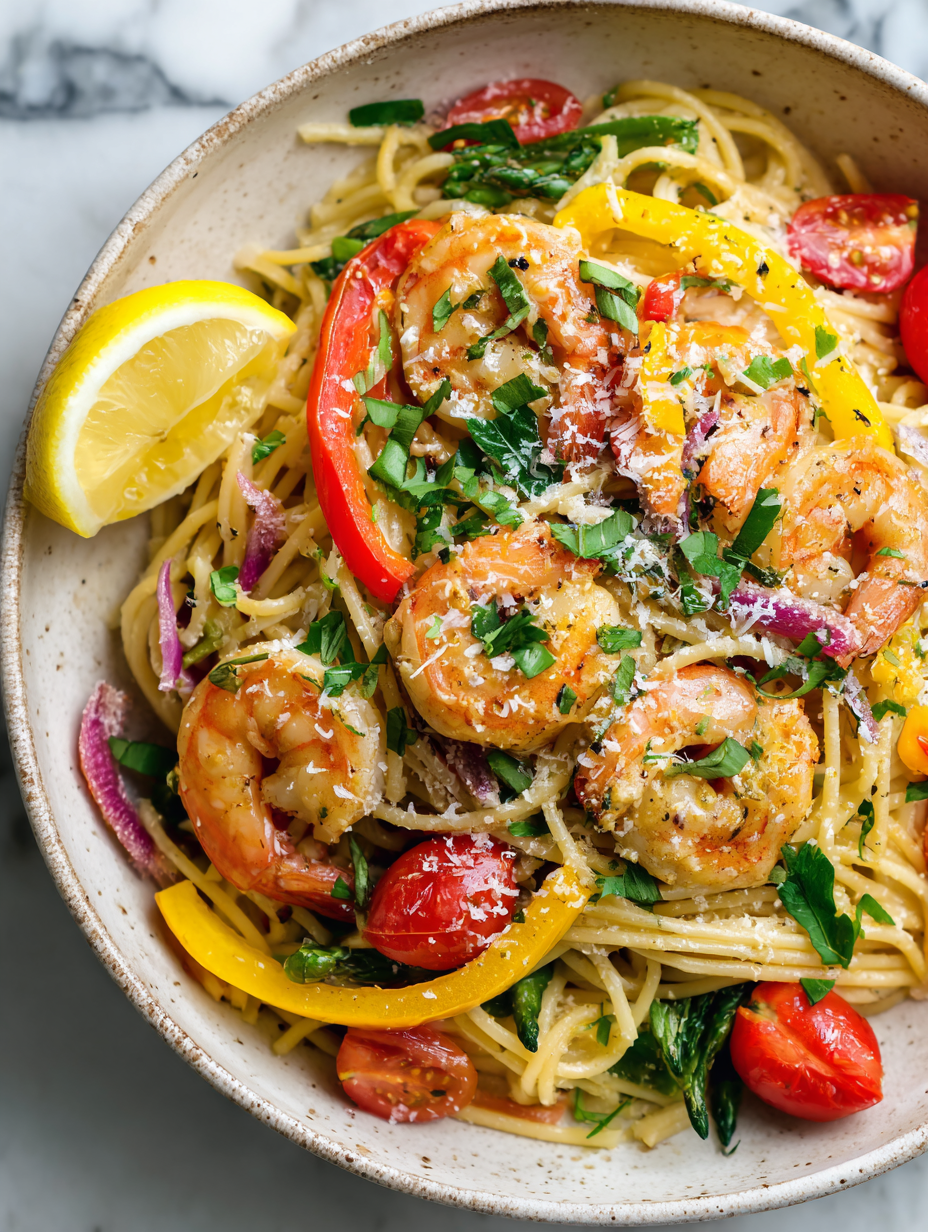
Shrimp Pasta Primavera
Ingredients
Equipment
Method
- Bring a large pot of salted water to a boil and cook the pasta until just al dente, about 8-10 minutes. Drain, reserving a cup of pasta water, and set aside.
- Pat the shrimp dry with paper towels, then season lightly with salt and pepper. Heat a large skillet over medium-high heat and add 1 tablespoon of olive oil.
- Add the shrimp to the hot skillet in a single layer. Sear for 2-3 minutes per side until they turn pink and develop a slight golden edge. Remove the shrimp and set aside.
- Add the remaining 1 tablespoon of olive oil to the same skillet. Toss in the minced garlic and sauté for about 30 seconds, until fragrant and slightly golden, filling the kitchen with a savory aroma.
- Add the julienned bell pepper and zucchini to the skillet. Sauté for 3-4 minutes, stirring frequently, until vegetables are tender but still crisp and vibrant.
- Return the cooked shrimp to the skillet along with halved cherry tomatoes. Squeeze in the lemon juice and sprinkle the lemon zest over everything. Cook for another 2 minutes, allowing the tomatoes to soften and release their juices, creating a light, fresh sauce.
- Add the drained pasta to the skillet. Toss everything together, adding reserved pasta water gradually to loosen the sauce and help it cling to the noodles. Cook for another minute or two until glossy and well-coated.
- Remove from heat and sprinkle chopped fresh basil or parsley over the top. Give everything one last toss to distribute the herbs evenly.
- Serve immediately, garnished with extra lemon wedges and herbs if desired. Enjoy this colorful, spring-inspired dish that’s bursting with fresh flavors and textures.
Notes
Pro Tips for Perfect Primavera
- Bolded: Use high heat to sear shrimp quickly, locking in juices and creating a flavorful crust.
- Bolded: Toss vegetables in oil and salt before sautéing to enhance their natural sweetness and color.
- Bolded: Add pasta water gradually to loosen the sauce and help it cling better to the noodles.
- Bolded: Squeeze lemon juice at the end for a fresh, bright contrast that balances the richness of the shrimp and oil.
- Bolded: Keep an eye on garlic; cook until fragrant but not browned to avoid bitterness.
- Bolded: Use tongs to toss ingredients gently, ensuring even coating without breaking delicate vegetables.
- Bolded: Rest the finished dish for a minute to allow flavors to meld before serving.
Common mistakes and how to fix them
- OVERCOOKED SHRIMP: Shrimp turn rubbery if overcooked. Remove promptly when pink and slightly firm.
- DULL PAN HEAT: If vegetables aren’t blistering, increase heat and cook in batches for even sear.
- SOGGY PASTA: Drain thoroughly and toss with hot sauce immediately to prevent clumping and sogginess.
- MISTAKENLY ADDED SALT: Taste vegetables before salting; they can become too salty if over-seasoned early.
Quick fixes and pantry swaps
- When sauce is too thick, splash in more pasta water to loosen and shimmer.
- If shrimp aren’t pink quickly, increase heat slightly and give space for even searing.
- Splash a bit of lemon juice if vegetables release too much water and become soggy.
- Patch over-seasoned dish with a splash of plain pasta water to dilute saltiness.
- Shield delicate cherry tomatoes from overcooking by adding them last, keeping their burst of sweetness.
Prep, store, and reheat tips
- Prep all vegetables and shrimp up to a day in advance; store in airtight containers in the fridge for up to 24 hours. The fresh crunch and aroma stay lively.
- Cook the pasta ahead of time and keep it in a sealed container in the fridge for up to 1 day. Reheat briefly in hot water or microwave until steaming to prevent stickiness.
- The assembled dish can be stored in the fridge for 1-2 days. Reheat gently in a skillet over low heat, adding a splash of water or oil, until heated through and fragrant.
- For best flavor, add a squeeze of lemon and fresh herbs after reheating. The dish’s bright, fresh notes diminish slightly over time but still carry that springtime vibe.
Top questions about Shrimp Pasta Primavera
1. Should I peel and devein the shrimp?
Peel and devein the shrimp for the best texture and flavor. Use fresh or thawed shrimp for quick cooking.
2. How do I know when the pasta is done?
Cook the pasta until just al dente, about 8-10 minutes. Too soft and it won’t hold the sauce well.
3. When do I add the vegetables?
Add the vegetables after the shrimp, cooking them just until tender and still vibrant, around 3-4 minutes.
4. How hot should the pan be when cooking the shrimp?
Use high heat to sear the shrimp quickly, around 190°C / 375°F, until they turn pink and opaque, about 2-3 minutes per side.
5. Why should I save pasta water?
Reserve some pasta water before draining. Use it to loosen the sauce and help it cling to the pasta.
6. Can I substitute lemon with lime or other citrus?
Fresh lemon juice brightens the dish with a zesty punch. Lime can be used as a substitute for a different citrus flavor.
7. How do I avoid overcooking the shrimp?
Overcooked shrimp become rubbery. Remove them from heat as soon as they turn pink and are just opaque.
8. What if the sauce gets too thick?
If the sauce is too thick, splash in a bit of reserved pasta water to loosen it and add shine.
9. When should I add herbs?
Use fresh herbs like basil or parsley at the end for maximum flavor and vibrant color.
10. How long can I keep leftovers?
This dish is best enjoyed fresh, but you can store leftovers in the fridge for up to 2 days. Reheat gently in a skillet with a splash of water or oil.
This shrimp pasta primavera isn’t just a meal; it’s a reminder that fresh ingredients and quick techniques can turn any night into a celebration of spring’s bounty. The vibrant colors and lively flavors make it perfect for those days when you want something bright and satisfying without fuss.
Whenever I make this, I feel a small rush of pride, knowing something so simple can taste so lively. It’s the kind of dish that makes you pause, take a deep breath, and enjoy every colorful bite as a little reminder of the season’s promise.