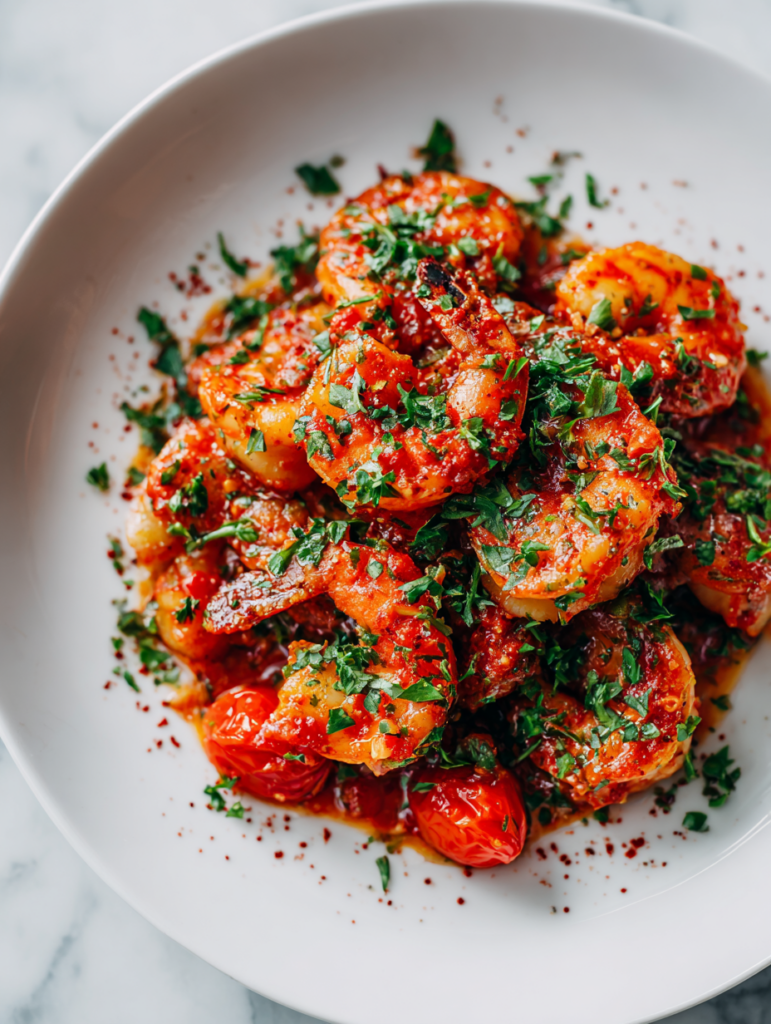
This shrimp arrabbiata is my go-to when I want something fiery but not overwhelming. I love how the spicy tomato sauce clings to the sweet, tender shrimp, creating a contrast that keeps each bite interesting. It’s a dish that’s quick to make but feels like you’ve put some effort into it, which always feels good after a long day.
What really draws me to this recipe is how it balances heat with a touch of sweetness—like a little secret in every mouthful. I’ve played around with the chili levels to find that perfect, nose-running kick that doesn’t drown out the delicate seafood flavor. It’s one of those recipes I keep coming back to, especially when I want something comforting yet lively.
Focusing on balancing the fiery heat of arrabbiata with the delicate sweetness of shrimp, emphasizing how the contrast elevates the dish beyond standard pasta.
Balancing Heat and Sweetness
- I love how the spicy heat makes my nose tingle, but the sweetness of the shrimp keeps it balanced.
- There’s a small thrill in watching the chili flakes dance in the oil before adding the tomatoes—like a fiery ballet.
- This dish reminds me of summer nights in Italy, where simple ingredients come alive with just a pinch of heat.
- I used to shy away from spicy sauces, but now I can’t imagine this without that fiery kick—it’s addictive.
- Cooking this makes the kitchen smell like a smoky, spicy paradise—perfect for unwinding after a long day.
Inspiration Behind the Dish
This recipe took shape after a trip to Naples, where I tasted a version of arrabbiata that was unexpectedly bright with lemon and a little smoky from the charring of the peppers. I realized that using fresh, slightly charred chili peppers and a squeeze of lemon at the end really lifts the dish into something memorable. Ever since, I’ve been chasing that perfect balance of heat, brightness, and seafood sweetness, making it my own personal signature dinner.
Historical & Cultural Tidbits
- This dish has roots in Italian coastal cuisine, where seafood and spicy tomato sauces mingle by the sea.
- Arrabbiata means ‘angry’ in Italian, referring to the fiery chili heat that defines this sauce’s character.
- Historically, this recipe was a quick, peasant-style meal, using pantry staples like chili, garlic, and canned tomatoes.
- In some regions of Italy, adding seafood like shrimp was a way to elevate the simple sauce for special occasions.
- The fiery chili in arrabbiata might have been a way to preserve flavors in hot climates before refrigeration.
Key Ingredients and Tips
- Shrimp: I prefer large, peeled, deveined shrimp—they cook quickly and stay juicy; look for a slight give when pressed, not rubbery. Skip if you’re allergic or want a vegetarian version.
- Canned tomatoes: I use San Marzano for their sweet, bright flavor, but you can substitute regular crushed tomatoes. If your sauce tastes flat, add a pinch of sugar and simmer longer to deepen the flavor.
- Garlic: Fresh garlic is a must for that pungent, aromatic punch. Crush it until fragrant, but don’t burn it—that bitter taste ruins everything. If you’re out, garlic powder works in a pinch, but it’s not the same.
- Chili flakes: I love a good kick, but start small; I add a half teaspoon and adjust. Look for bright red, flaky chili—dull or dark flakes tend to be milder or less fresh. Handle with care—those flakes can fly!
- Olive oil: Use a good extra virgin for that fruity, peppery note. Don’t skimp—cheap oil can taste dull and greasy. Warm it gently; you want it just shimmering, not smoking.
- Lemon juice: A squeeze at the end lifts everything—brightens the sauce and keeps the shrimp from tasting heavy. Fresh lemon is best; bottled lemon juice can dull the freshness. Use right before serving for that zesty pop.
- Fresh parsley: I toss in chopped parsley just before plating for color and a herbal brightness. If you don’t have it, basil or even a touch of oregano can add a different but nice herbal note.
Spotlight on key ingredients
Shrimp:
- I prefer large, peeled, deveined shrimp—they cook quickly and stay juicy; look for a slight give when pressed, not rubbery. Skip if you’re allergic or want a vegetarian version.
- Canned tomatoes: I use San Marzano for their sweet, bright flavor, but you can substitute regular crushed tomatoes. If your sauce tastes flat, add a pinch of sugar and simmer longer to deepen the flavor.
Chili & Garlic:
- Chili flakes: I love a good kick, but start small; I add a half teaspoon and adjust. Look for bright red, flaky chili—dull or dark flakes tend to be milder or less fresh. Handle with care—those flakes can fly!
- Garlic: Fresh garlic is a must for that pungent, aromatic punch. Crush it until fragrant, but don’t burn it—that bitter taste ruins everything. If you’re out, garlic powder works in a pinch, but it’s not the same.
Notes for ingredient swaps
- Seafood-Free: Swap shrimp for sautéed mushrooms or zucchini. Keeps the dish vegetarian but loses that briny sweetness.
- Gluten-Free: Use gluten-free pasta or spiralized zucchini noodles. Keep in mind, texture may vary slightly.
- Spicy Heat: Reduce chili flakes for milder flavor or substitute with smoked paprika for a smoky undertone.
- Tomatoes: Use fresh ripe tomatoes blended into a sauce if canned aren’t available. Fresh adds a brighter, juicier note.
- Olive Oil: Substitute with light avocado oil for a neutral, healthy alternative that still cooks well at high heat.
- Lemon Juice: Lime juice can brighten the dish similarly but offers a slightly different citrus profile. Lemon preserves that bright, zesty punch.
- Herbs: Basil or oregano can replace parsley if you want a different herbal aroma—each brings its own fresh, vibrant note.
Equipment & Tools
- Large skillet: Cook the sauce and shrimp, develop flavor.
- Pasta pot: Cook pasta efficiently.
- Tongs or slotted spoon: Handle shrimp and toss pasta.
- Ladle or spoon: Taste and adjust seasoning.
- Measuring spoons: Accurately add chili flakes and lemon juice.
Step-by-step guide to Shrimp Arrabbiata
- Gather your equipment: a large skillet (preferably stainless steel or cast iron), tongs or a slotted spoon, and a pasta pot with a lid. Fill the pot with water, salt generously, and bring to a rolling boil (around 100°C / 212°F).
- Start on the sauce: Heat 2 tablespoons of good quality olive oil over medium heat (about 160°C / 320°F) in your skillet. Add 3-4 crushed garlic cloves and 1 teaspoon chili flakes. Cook until fragrant, about 30 seconds, until the garlic is golden and aromatic. Be careful not to burn it—if it starts to turn dark, lower the heat.
- Add the crushed canned tomatoes (around 400g or 14 oz) to the skillet. Stir well, then simmer gently for 10 minutes, until the sauce thickens slightly and the flavors meld. Stir occasionally and watch for bubbling—if it splatters, lower the heat. Season with salt to taste.
- While the sauce simmers, cook 400g (about 14 oz) of large peeled shrimp in boiling salted water for 2-3 minutes. They should turn pink and opaque. Drain and set aside. If using frozen shrimp, thaw completely before cooking, and pat dry to prevent excess water in the pan.
- Taste the tomato sauce. It should smell bright, spicy, with a hint of garlic and a slight sweetness. If too bitter, add a pinch of sugar. Adjust chili flakes for heat—more for a fiery punch, less if you prefer milder.
- Add the cooked shrimp directly into the sauce in the skillet. Toss gently to coat, cooking together for an additional 2 minutes until heated through. The shrimp should be tender and juicy, not rubbery. If they curl tightly or feel firm, they’re overcooked—remove immediately.
- Meanwhile, cook your pasta in the boiling salted water according to package instructions until al dente (about 8 minutes). Drain, reserving a small cup of pasta water. Toss the pasta directly into the sauce or serve the sauce over the pasta, adding a splash of pasta water if needed to loosen the sauce.
- Finish with a squeeze of fresh lemon juice and chopped parsley or basil. Toss gently to distribute. Check the seasoning—add more salt, chili, or lemon as needed.
- Plate immediately, spooning the spicy shrimp arrabbiata over the pasta. Garnish with extra herbs and a drizzle of olive oil. Serve hot, with crusty bread on the side if you like.
Serve immediately. Garnish with chopped fresh herbs and a light drizzle of olive oil for brightness. If not eating right away, keep warm on very low heat—avoid overcooking the shrimp or drying out the sauce.
How to Know It’s Done
- Sauce is vibrant red, fragrant, and slightly thickened after simmering.
- Shrimp are pink, opaque, and tender, not rubbery.
- Pasta is cooked al dente with a slight bite, not mushy or underdone.
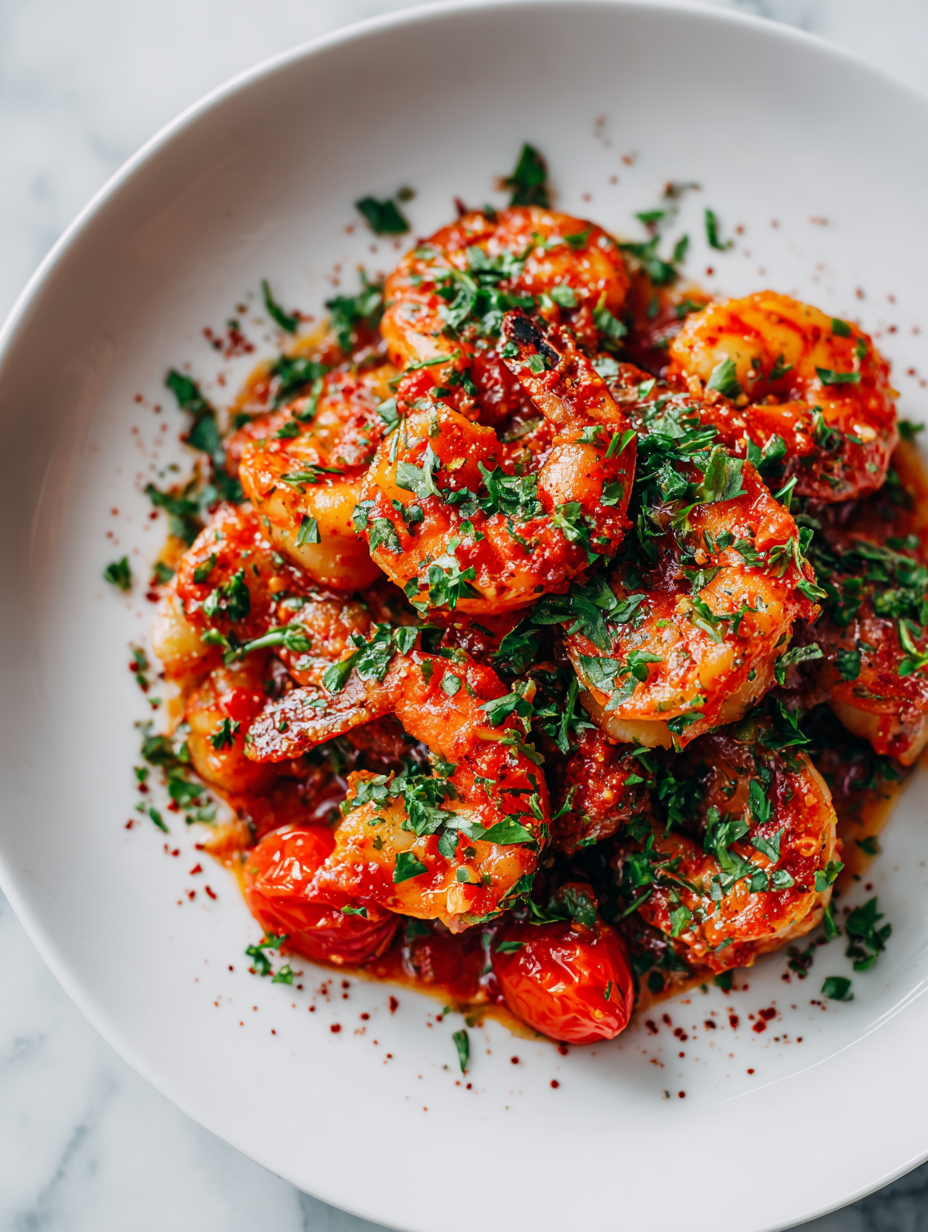
Shrimp Arrabbiata
Ingredients
Equipment
Method
- Bring a large pot of salted water to a rolling boil and cook your pasta until al dente, about 8 minutes. Drain and set aside.
- While the pasta cooks, heat olive oil in a large skillet over medium heat. Add the minced garlic and chili flakes, cooking for about 30 seconds until fragrant and slightly golden, filling your kitchen with a warm, spicy aroma.
- Add the canned tomatoes to the skillet, crushing them gently with a spoon if whole. Let the sauce simmer gently for about 10 minutes until it thickens slightly and turns a vibrant red, stirring occasionally.
- Meanwhile, cook the shrimp in boiling salted water for 2-3 minutes until they turn pink and opaque. Drain well and set aside.
- Taste the sauce and adjust the seasoning with a pinch of salt if needed. Squeeze in fresh lemon juice, stirring to brighten the flavors.
- Add the cooked shrimp to the tomato sauce, gently tossing to coat and heat through for about 2 minutes. The shrimp should be tender and juicy, absorbing the spicy, fragrant sauce.
- Combine the drained pasta with the sauce and shrimp in the skillet, tossing well to ensure everything is evenly coated.
- Serve hot, garnished with chopped parsley and an extra squeeze of lemon if desired, for a fresh, herbal finish.
Pro tips for Shrimp Arrabbiata
- Bloom garlic gently → cook until fragrant, not browned, for a sweet, aromatic foundation.
- Adjust chili gradually → start with half teaspoon, taste, then add more to control heat.
- Use a light hand with oil → enough to shimmer, but not smoke, for a clean sauce base.
- Toss pasta in sauce hot → helps sauce cling better, creating a more integrated dish.
- Finish with acid → lemon juice brightens flavors and balances the spicy richness.
- Taste as you go → adjust salt, heat, and acidity for your perfect balance.
- Rest briefly before serving → allows flavors to meld, enhancing overall harmony.
Common mistakes and how to fix them
- FORGOT to adjust heat after adding tomatoes → turn down to prevent burning.
- DUMPED in all chili flakes at once → add gradually, tasting for desired heat.
- OVER-TORCHED the garlic → cook over medium heat, remove before it turns dark.
- FAILED to taste sauce before serving → adjust seasoning and acidity for balance.
Quick Fixes and Pantry Swaps
- When sauce is too thick, splash in hot pasta water to loosen and add a silky texture.
- If shrimp turns rubbery, remove immediately and cook in smaller batches for even heat.
- Splash extra lemon juice if sauce feels flat or dulls; it brightens instantly.
- Patch over-salted sauce with a small sugar pinch to balance flavors.
- Shield smoky aroma by lowering heat when garlic begins to brown too quickly.
Prep, store, and reheat tips
- Prep the sauce: Make the spicy tomato sauce up to a day ahead. Let it cool completely, then store in airtight container. Reheat gently, smelling the smoky, garlic aroma to check readiness.
- Cook the shrimp just before serving: Keep cooked shrimp in an airtight container for up to 2 hours in the fridge. Reheat briefly in warm water or add directly to hot sauce to rewarm, watching for overcooking.
- Cook pasta separately: Boil pasta until al dente, drain, and toss with a little olive oil. Store in an airtight container for up to 24 hours. Reheat in boiling water or microwave with a splash of water, looking for that tender bite.
- Storage tips: Flavors deepen over time, especially the chili and garlic. The sauce may thicken when refrigerated—stir in a splash of hot water or pasta water to loosen before serving.
- Reheating: Gently reheat the sauce on low heat, stirring often, until fragrant and bubbling. Add a squeeze of lemon and fresh herbs at the end to revive brightness and aroma.
Top Questions About Shrimp Arrabbiata
1. What kind of shrimp should I use?
Use large, fresh, peeled, deveined shrimp for tender, juicy bites. Frozen works if thoroughly thawed and patted dry.
2. How spicy should the dish be?
Start with half a teaspoon of chili flakes, taste, then add more if you want more heat. Bright red flakes are best.
3. How do I know when the sauce is ready?
Simmer the tomato sauce until it thickens slightly and smells fragrant, about 10 minutes. The oil should shimmer but not burn.
4. How should I cook the pasta?
Cook pasta until al dente, about 8 minutes. Reserve some pasta water to loosen the sauce if needed.
5. Why add lemon at the end?
Add a squeeze of fresh lemon juice at the end for brightness. Use bottled lemon if fresh isn’t available, but fresh is better.
6. What kind of olive oil is best?
Use good quality olive oil for flavor. Warm it until just shimmering, not smoking, to develop aroma without burning.
7. What herbs should I add?
Finish with chopped herbs like parsley or basil for freshness. If unavailable, oregano or thyme can work.
8. What if my sauce is too thick?
If the sauce gets too thick, add a splash of hot pasta water to loosen it up.
9. How do I avoid overcooking shrimp?
Overcooked shrimp becomes rubbery. Remove from heat immediately, or cook in small batches for even heat.
10. Can I make this ahead?
Store the sauce in an airtight container in the fridge for up to 2 days. Reheat gently on low heat, smelling for that smoky, spicy aroma.
This dish brings a fiery brightness that feels especially right as we lean into those spicy, citrusy flavors. It’s imperfect, it’s lively, and it’s a reminder that good cooking isn’t about perfection but about feeling connected to what’s in the pan.
Whenever I make this, I’m reminded of how simple ingredients can surprise you—how a little heat, a squeeze of lemon, and good seafood can turn a humble plate into something memorable. It’s the kind of meal that sticks with you long after the last bite.