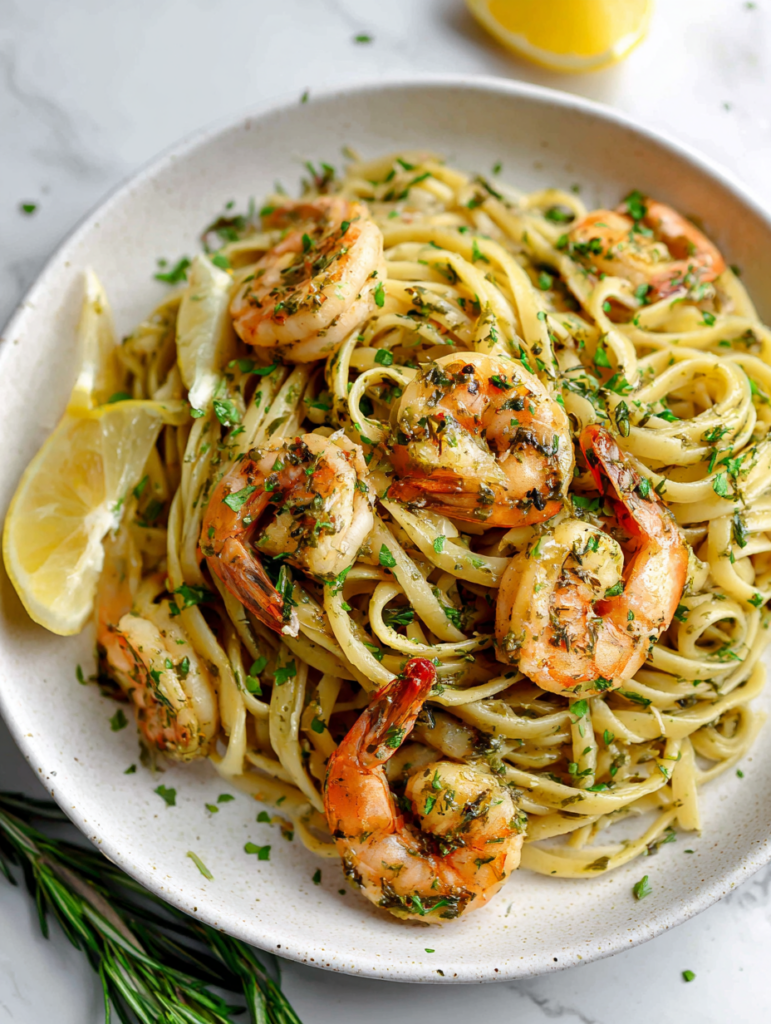
In my kitchen, I’ve learned that the simplest ingredients often carry the most weight. A handful of fresh herbs—basil, parsley, and tarragon—can turn a humble shrimp linguine into something bursting with fragrance and life. It’s not about complicated techniques but about listening to the natural flavors and letting them shine.
This dish is a reminder to slow down and appreciate the quiet magic of herbs. Watching them bloom on my windowsill, I realize how much they can elevate everyday cooking. The bright, aromatic burst from fresh herbs makes each bite feel like a little celebration of what’s in season and close to hand. Sometimes, it’s these small touches that turn an ordinary meal into a memorable moment.
They say good cooking is about balance, but I think it’s also about respecting what’s fresh and letting it speak. With this shrimp linguine, I focus on the herbs’ vibrant, fragrant notes—no overpowering spices, just clean, bright flavors. It’s honest food, made with what’s available and loved. There’s something satisfying about crafting a dish that’s straightforward yet feels special because of those little, overlooked details.
Focusing on the overlooked power of simple, fresh herbs and how they transform a basic shrimp linguine into a fragrant, vibrant dish that highlights the beauty of minimal ingredients. It’s about appreciating the quiet magic of herbs blooming in your kitchen and how they can elevate everyday cooking into something memorable.
Herbs’ Hidden Power in Seafood
- Cooking shrimp perfectly still feels like a small victory, especially when they turn tender and slightly caramelized.
- There’s a strange joy in tossing pasta into boiling water and hearing that rhythmic crackle—like a tiny symphony.
- Using fresh herbs feels like a secret between me and the dish, brightening every bite with just a few snips.
- Seeing the sauce come together in one pan, glossy and fragrant, reminds me how simple ingredients can surprise you.
- That moment when I plate the linguine, herbs sprinkled on top, smelling the sea and garden in one bite—pure satisfaction.
The story behind this recipe
- This shrimp linguine recipe came about during a weekend when I was trying to use up the last of my fresh herbs and some leftover shrimp. I wanted something quick, bright, and satisfying—no heavy sauces or complicated steps. It’s funny how a simple dish like this can become a little ritual in my kitchen, especially when I need comfort in a bowl.
- I remember the first time I made it for friends; the smell of garlic and herbs filling the air, everyone’s eyes lighting up when they tasted that tender shrimp and al dente pasta. It’s become a go-to for busy nights, but also a reminder that simple ingredients, treated well, can really shine and bring people together without fuss.
- heading
- story_type
Historical & Cultural Roots
- This dish’s roots trace back to Italy’s coastal regions, where fresh seafood and pasta have been paired for centuries.
- Shrimp linguine became popular in American homes during the mid-20th century, thanks to the rise of convenience and canned seafood.
- The simplicity of the ingredients reflects a Mediterranean tradition of highlighting the ocean’s bounty with minimal fuss.
- Historically, linguine was favored over spaghetti in coastal Italy because its flat shape better holds onto sauces and herbs.
- Using fresh herbs in seafood pasta dishes was once a sign of a well-tended garden and a respect for seasonal, local ingredients.
Ingredient breakdown
- Shrimp: I prefer deveined, peeled shrimp; their tender sweetness is key. If yours are smaller, adjust cooking time so they don’t overcook and turn rubbery.
- Linguine: Fresh or dried works; I love the slightly chewy bite of good dried linguine. If you only have spaghetti, that’s fine too, just a little more rounded in texture.
- Garlic: Use fresh cloves, smashed and minced. The aroma of garlic sizzling in olive oil is my signal to start a good sauce—don’t burn it, though, or it turns bitter.
- Olive oil: A good drizzle of fruity extra virgin makes all the difference. If you’re in a pinch, light vegetable oil works, but you’ll miss that rich aroma.
- Herbs: Fresh parsley and basil really brighten the dish. If fresh herbs aren’t available, a pinch of dried gives a hint of flavor, but fresh is best for vibrancy.
- Lemon: Brightens everything with its zesty, tangy punch. If lemon isn’t handy, a splash of white wine vinegar can add a similar lift, but start with less and taste.
- Red pepper flakes: Just a pinch adds a subtle heat that balances the richness. If you prefer less spice, skip or reduce—they still add nice complexity.
Spotlight on key ingredients
Shrimp:
- I prefer deveined, peeled shrimp; their tender sweetness is key. Keep an eye out for overcooking—pink and slightly firm is perfect.
- Linguine: Dried or fresh, I love the chewy bite of good dried linguine. It holds sauce well and adds to the dish’s satisfying texture.
Herbs and Lemon:
- Herbs: Fresh parsley and basil really brighten the dish with their fragrant, green notes. They release their aroma quickly when chopped, so add last for maximum freshness.
- Lemon: Brightens everything with its zesty, tangy punch. When squeezed over hot pasta, it releases a fresh, citrusy aroma that lifts all the other flavors.
Notes for ingredient swaps
- Seafood Swap: Use scallops or firm white fish instead of shrimp for a different seafood experience, maintaining that tender bite and rich flavor.
- Pasta Alternatives: Try gluten-free linguine or zucchini noodles for a lighter, vegetable-forward version without sacrificing texture.
- Herb Variations: Replace fresh parsley and basil with cilantro or dill for a more aromatic, unexpected twist—think brighter and more herbal.
- Oil Choices: Use avocado oil or walnut oil if you want a nuttier flavor profile; just note they have different smoke points and aromas.
- Citrus Options: Lemon is classic, but lime or orange zest can add a unique, sweeter brightness—experiment based on your mood or pantry.
- Spice Level: Skip red pepper flakes if spice isn’t your thing, or add a dash of smoked paprika for a smoky undertone that’s still subtle.
- Wine Substitute: Use dry white wine, chicken broth, or skip altogether for a non-alcoholic version—each brings a different depth to the sauce.
Equipment & Tools
- Large pot: To cook the linguine to al dente.
- Large skillet or frying pan: To cook shrimp and toss everything together.
- Tongs: To toss pasta and shrimp easily.
- Sharp knife: To mince garlic and chop herbs.
- Measuring cups and spoons: To measure liquids and seasonings accurately.
Step-by-step guide to shrimp linguine
- Gather all your ingredients and tools: a large skillet, a pot for pasta, tongs, and a sharp knife. Have everything within reach; this dish comes together quickly.
- Bring a large pot of salted water to a rolling boil—about 1 tablespoon salt per 4 liters of water—then add linguine. Cook until al dente, about 8 minutes. Drain, but save a cup of pasta water.
- While pasta cooks, heat a large skillet over medium heat. Add 2 tablespoons olive oil, let it shimmer, and then toss in 3-4 minced garlic cloves. Sizzle until fragrant, about 30 seconds—be careful not to burn it; burnt garlic turns bitter.
- Add the shrimp to the skillet. Cook for about 2-3 minutes per side, until they turn pink and start to curl—look for a slight caramelization on the edges. If they turn rubbery, reduce heat or cook shorter time.
- Pour in about ½ cup of white wine or chicken broth to deglaze, scraping up any browned bits. Let it simmer for 1-2 minutes until slightly reduced and fragrant. If the pan is too dry, add a splash more oil or water.
- Toss the drained linguine into the skillet with shrimp. Add a handful of chopped fresh herbs—parsley and basil—and squeeze in half a lemon. Mix well, letting the pasta soak up the flavors. If it feels dry, add reserved pasta water a tablespoon at a time until glossy.
- Taste and adjust seasoning: more lemon, salt, or pepper if needed. The sauce should cling lightly to the pasta, fragrant with garlic and herbs, and the shrimp should be tender and juicy.
- Finish with a drizzle of good olive oil and a sprinkle of herbs. Plate immediately, garnished with extra basil if you like. Serve hot, with a lemon wedge on the side.
Serve immediately while hot. Garnish with extra herbs and a lemon wedge for bright contrast. No resting needed—this dish is best enjoyed fresh and fragrant.
How to Know It’s Done
- Shrimp are pink, opaque, and slightly caramelized on the edges.
- Pasta is al dente—firm to the bite, not mushy.
- Sauce is glossy and clings lightly to the noodles, with fragrant herbs and lemon aroma.
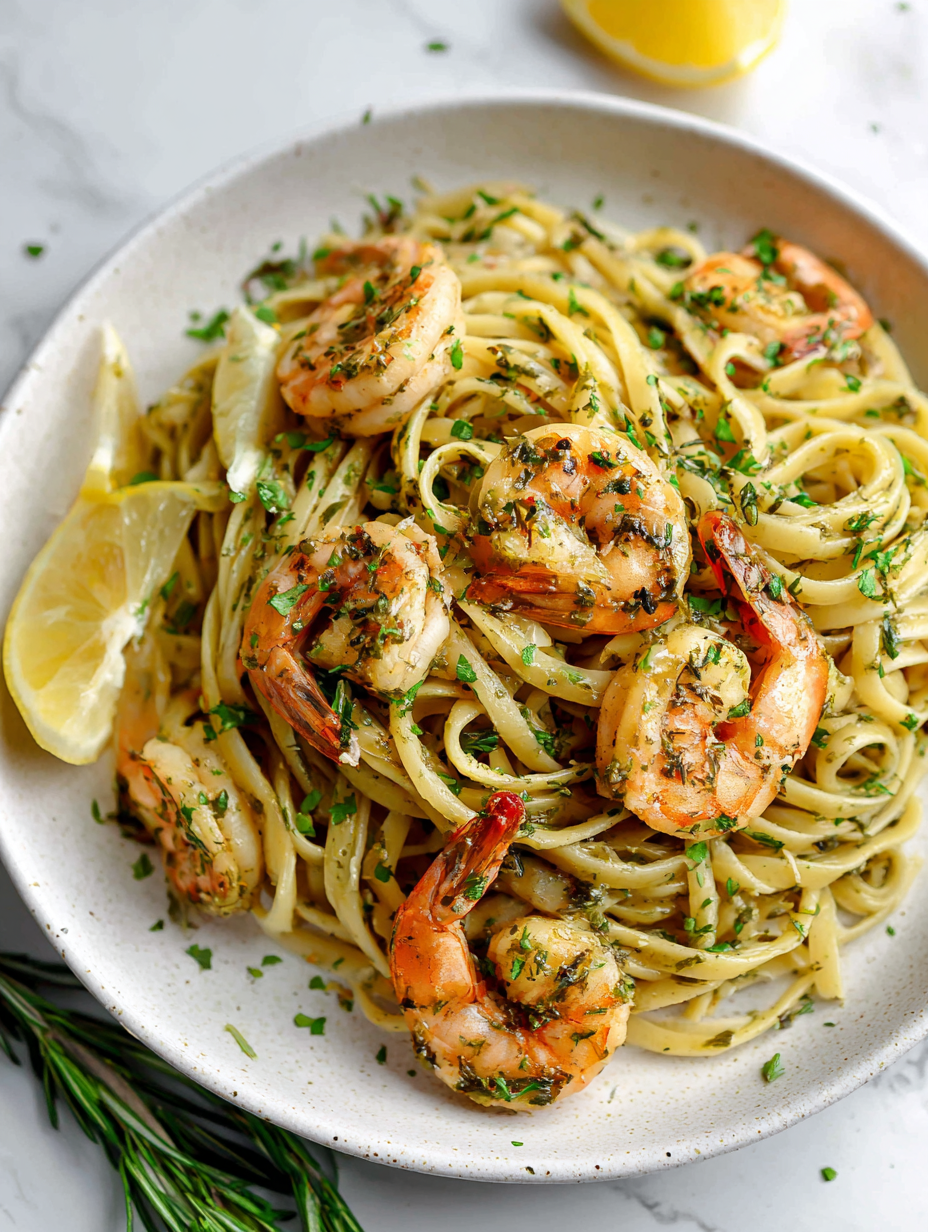
Herb-Infused Shrimp Linguine
Ingredients
Equipment
Method
- Bring a large pot of salted water to a boil, then add the linguine. Cook until just al dente, about 8 minutes, then drain and set aside, reserving a cup of pasta water.
- While the pasta cooks, heat the olive oil in a large skillet over medium heat. When shimmering, add the minced garlic and sauté until fragrant, about 30 seconds, stirring constantly to prevent burning.
- Add the shrimp to the skillet and cook for 2-3 minutes per side until they turn pink and develop a slight golden edge. Remove from skillet and set aside.
- Deglaze the pan with white wine or broth, scraping up any browned bits from the bottom. Let it simmer for 1-2 minutes until slightly reduced and fragrant.
- Return the cooked shrimp to the skillet, then add the drained linguine. Toss everything together gently, coating the pasta in the flavorful sauce.
- Stir in the chopped parsley and basil, then squeeze in the lemon juice and add lemon zest. Toss again to combine all the bright, fragrant flavors, adding reserved pasta water if the mixture feels dry.
- Season with salt, black pepper, and red pepper flakes to taste. Adjust seasoning until the dish tastes fresh and balanced.
- Serve immediately, garnished with extra herbs and lemon wedges if desired. Enjoy this fragrant, vibrant shrimp linguine while hot!
Pro tips for shrimp linguine
- Bolded mini-head: Use fresh herbs at the end. Their bright aroma is fleeting but vital for flavor.
- Bolded mini-head: Sauté garlic gently. Fragrant and golden is ideal—burnt garlic turns bitter fast.
- Bolded mini-head: Don’t overcook the shrimp. Pink and slightly firm, not rubbery, is perfect after 2-3 minutes per side.
- Bolded mini-head: Save pasta water. It’s starchy and helps loosen the sauce, making it cling better.
- Bolded mini-head: Add lemon juice off heat. Brightens the dish without cooking out the fresh citrus notes.
- Bolded mini-head: Keep your pan hot but not smoking. It crisps shrimp beautifully without burning the garlic.
- Bolded mini-head: Taste as you go. Balance salt, acidity, and spice—this dish comes alive with small adjustments.
Common mistakes and how to fix them
- FORGOT to watch shrimp: overcooking turns them rubbery. Fix by removing from heat early.
- DUMPED all herbs at once: add herbs in stages for layered flavor and brightness.
- OVER-TORCHED garlic: burns quickly, causing bitterness. Sauté over medium heat, watch closely.
- MISSED pasta salt: undersalted water makes pasta dull. Salt water generously for flavor.
Quick fixes and pantry swaps
- If shrimp overcooks, quickly splash with cold water to halt cooking and keep tender.
- When sauce is too thick, stir in a splash of pasta water for silky looseness.
- Splash extra lemon juice if herbs seem dull or flavor is muted during cooking.
- Patch burnt garlic by removing it immediately and adding fresh garlic to revive aroma.
- Shield delicate herbs from heat by adding at the last moment for maximum freshness.
Prep, store, and reheat tips
- Prep the garlic, herbs, and lemon zest ahead; store in airtight containers in the fridge for up to 2 days. Their fresh aroma will keep well, making assembly quicker.
- Cook the pasta al dente, drain, and toss with a little olive oil. Store in an airtight container in the fridge for up to 1 day. Reheat by tossing in boiling water briefly or microwaving with a splash of water, watching for that tender, slightly chewy texture.
- Peel and devein shrimp in advance; keep covered in the fridge for up to 1 day. For safety and freshness, cook it fresh if possible, but prepped shrimp can be sautéed directly from chilled for convenience.
- Sauce components like garlic and herbs can be made a few hours ahead. Keep them chilled and add to the hot pasta and shrimp just before serving to preserve their vibrant flavors and aroma.
- Refrigerate leftovers in an airtight container for up to 2 days. Reheat gently in a skillet over low heat, adding a splash of water or broth until the sauce is glossy and fragrant again, with the shrimp heated through and herbs fresh.
Top questions about shrimp linguine
1. Can I use frozen shrimp?
Use fresh, deveined shrimp for the best texture and flavor. Frozen shrimp work in a pinch, just thaw completely and pat dry before cooking.
2. How do I know when the pasta is done?
Cook the pasta until just al dente; it will continue to soften slightly when mixed with the hot sauce and shrimp.
3. When should I add the herbs and lemon?
Add lemon juice and herbs at the end to keep their bright, fresh aroma intact. Overcooking them dulls the flavor.
4. Can I skip the olive oil?
Use good quality olive oil for sautéing; it enhances the fragrance and richness of the dish significantly.
5. How spicy is this dish?
Adjust the spice level by adding more or less red pepper flakes according to your taste. They add a gentle warmth.
6. Should I save pasta water?
Save some pasta water before draining; it’s starchy and helps loosen the sauce if it thickens too much.
7. How do I cook shrimp perfectly?
Cook the shrimp in a hot skillet for 2-3 minutes per side until they turn pink and slightly caramelized. Don’t overcook or they turn rubbery.
8. How do I avoid burning the garlic?
Use freshly minced garlic for maximum aroma. Sauté gently over medium heat to avoid bitterness from burning.
9. Can I make this ahead?
This dish is best served immediately while the pasta is still glossy and fragrant. Reheating may diminish the fresh herb aroma.
10. What if I over-season the dish?
If you over-season, balance with a squeeze of fresh lemon or a splash of water to mellow the flavors.
This shrimp linguine isn’t just about the ingredients; it’s about the little moments—the fragrant sizzle of garlic, the bright pop of lemon, the tender shrimp. It’s a dish that feels honest and approachable, perfect for a busy weeknight or a quiet weekend dinner.
In the end, it’s these simple, fresh flavors that stick with me—the way herbs can brighten a meal and make everything feel a little more special. No fuss, just good food that reminds me why I keep coming back to the kitchen, again and again.