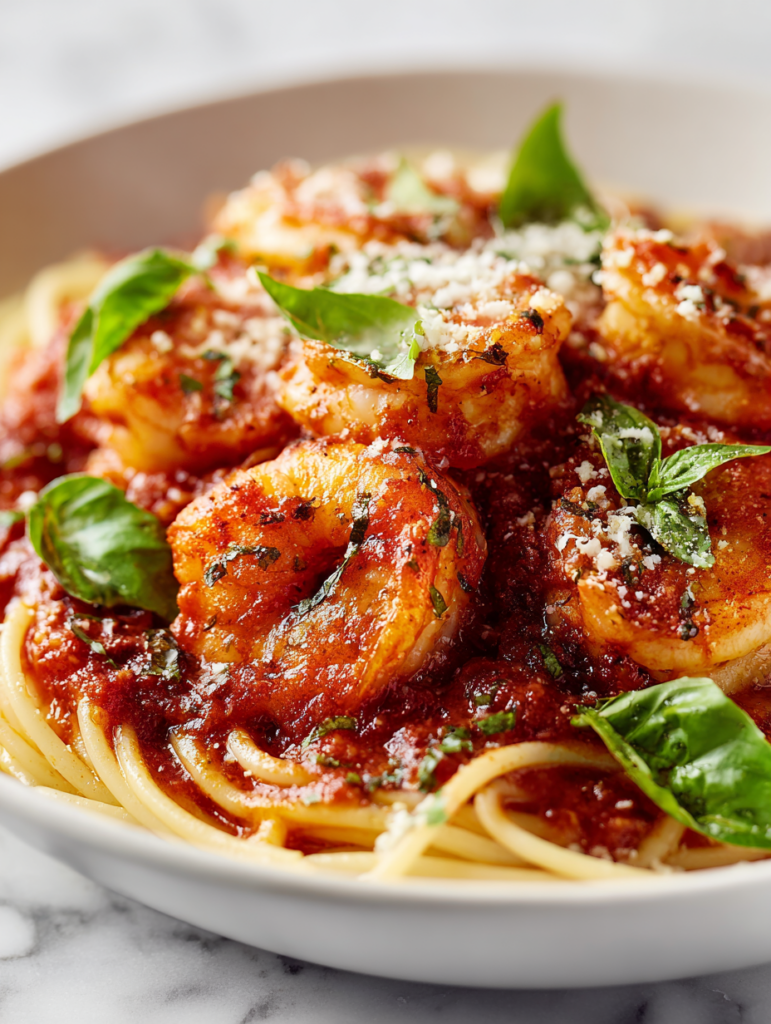
I’ve always believed that a good marinara is the backbone of any seafood dish. When I first started focusing on the sauce itself, I realized how a simple, well-made tomato base could turn even humble shrimp into something special. It’s not about fancy ingredients, but about coaxing out the rich, bright flavors that make the dish memorable.
This recipe is my go-to when I want something comforting yet fresh. I love how the shrimp soak up the savory, garlicky tomato sauce—each bite feels like a tiny celebration of tangy, smoky, lemon-bright flavors. It’s a quick dish to throw together, but it’s got that layered depth that makes it feel like a weekend treat.
Focusing on the overlooked importance of the tomato sauce base, this recipe emphasizes how a simple, well-seasoned marinara can elevate shrimp from ordinary to memorable, highlighting the sauce as the true star of the dish.
The overlooked power of the tomato
- I still remember the first time I nailed this sauce—it was like discovering a secret handshake with flavor.
- Cooking this dish always takes me back to weekend family dinners, where laughter and garlic filled the air.
- There’s a thrill in watching the shrimp turn pink and plump, soaking up all that tangy tomato goodness.
- Sometimes, I just want something quick, but I refuse to settle for anything less than deeply layered flavors.
- Every time I make this, I feel a little proud—like I’ve cracked a code that makes my kitchen smell incredible.
The story behind this recipe
- This recipe sprouted from a night when I was low on time but craving something warm and satisfying. I remembered a small seafood shack I visited on a coastal trip, where their marinara was so fragrant and smoky it stuck with me. I started experimenting at home, trying to capture that essence—rich, slightly charred tomato, with a punch of garlic and a splash of lemon. Turns out, simple ingredients can really shine if you treat them right.
- Cooking this dish makes me think of those late summer evenings when everything feels just a little more relaxed. It’s a reminder that good food doesn’t need fuss—just honest techniques and fresh ingredients. The smell of garlic sizzling and the bright pop of lemon juice keep me coming back to this one, especially on days when I need comfort fast.
- heading: The story behind this recipe
Trivia and historical tidbits
- Shrimp marinara has roots in Italian coastal kitchens, where fresh seafood and simple tomato sauces are staples.
- The dish gained popularity in America during the 20th century, blending Italian tradition with local seafood abundance.
- Historically, marinara sauce was a humble, quick-cook tomato sauce, often made with canned tomatoes before fresh ingredients became common.
- Some culinary historians suggest that the use of shrimp in marinara reflects coastal regions’ access to both seafood and ripe tomatoes.
- Modern takes sometimes include a splash of white wine or crushed red pepper, but the core remains garlic, tomatoes, and shrimp.
Key ingredients and tips
- Shrimp: I prefer deveined, tail-on shrimp for easy eating and a better presentation—look for firm, pink ones with a slight sheen, they soak up the sauce beautifully.
- Canned tomatoes: I use whole peeled in juice, crushing them by hand for a rustic texture—if you want a smoother sauce, go for crushed or pureed, but keep an eye on the acidity, add a pinch of sugar if needed.
- Garlic: Fresh cloves, smashed and minced—nothing beats the aroma of garlic frying in olive oil, it’s the soul of this dish, but don’t let it burn, or it turns bitter quickly.
- Olive oil: Good quality, peppery extra-virgin—use enough to gently sizzle the garlic and coat the shrimp, it adds depth and a fruity note, skip cheap oil for flavor.
- Red pepper flakes: A pinch for heat—adds a subtle kick that balances the sweetness of the tomatoes and the richness of the shrimp, adjust to your spice tolerance.
- Fresh basil: Torn right before serving—its vibrant aroma and slightly peppery flavor brighten the sauce and add a fresh burst, don’t skip it or use dried—freshness matters.
- Lemon: Bright juice and zest—adds a clean, tangy contrast that lifts the whole dish, squeeze just before serving to keep that zesty pop, avoid overdoing it.
Spotlight on key ingredients
Shrimp:
- I prefer deveined, tail-on shrimp for easy eating and a better presentation—look for firm, pink ones with a slight sheen, they soak up the sauce beautifully.
- Canned tomatoes: I use whole peeled in juice, crushing them by hand for a rustic texture—if you want a smoother sauce, go for crushed or pureed, but keep an eye on the acidity, add a pinch of sugar if needed.
- Garlic: Fresh cloves, smashed and minced—nothing beats the aroma of garlic frying in olive oil, it’s the soul of this dish, but don’t let it burn, or it turns bitter quickly.
Tomatoes:
- Canned tomatoes: Bright, tangy, and slightly sweet—crushed or whole peeled, they form the sauce’s base and soak up flavors as they simmer, so choose ripe, good-quality ones for best results.
- Fresh basil: Torn just before serving, its vibrant, peppery aroma lifts the dish—avoid dried basil here, the fresh leaves really make it pop and add a burst of green freshness.
Notes for ingredient swaps
- Dairy-Free: Swap traditional butter or cream-based sauces with a splash of coconut milk or olive oil for richness, but expect a slightly lighter, less creamy flavor.
- Gluten-Free: Use gluten-free pasta or serve over zucchini noodles to keep it friendly for gluten sensitivities without sacrificing texture.
- Low-Sodium: Choose no-salt-added canned tomatoes and skip added salt; enhance flavor with extra herbs and a squeeze of lemon instead.
- Spicy Kick: Replace red pepper flakes with sliced fresh chili or a dash of hot sauce for more heat—be mindful of the heat level and adjust accordingly.
- Sweetness Boost: Add a small pinch of sugar or honey if the tomato sauce feels too acidic; it rounds out the flavors subtly, without overpowering.
- Vegetarian: Omit shrimp and add sautéed vegetables like bell peppers, zucchini, or eggplant for a hearty, veggie-packed version.
- Herb Variations: Substitute basil with oregano or thyme to vary the aromatic profile, especially if you prefer a more Mediterranean or rustic flavor.
Equipment & Tools
- Large skillet: To cook the sauce and shrimp comfortably in one pan.
- Wooden spoon: For stirring and scraping bits, gentle on cookware.
- Sharp knife: To mince garlic and prepare ingredients efficiently.
- Cutting board: A stable surface for chopping and prepping.
- Measuring cup: To measure liquids precisely, like lemon juice.
Step-by-step guide to shrimp marinara
- Equipment & Tools: Get a large skillet (preferably stainless or cast iron) to hold everything comfortably, a wooden spoon for stirring, a sharp knife for garlic, and a cutting board. Have a small bowl ready for peeled shrimp and a measuring cup for liquids.
- Heat 2 tbsp olive oil over medium heat (about 160°C/320°F) in the skillet. When shimmering, add 4 minced garlic cloves. Cook until fragrant, about 30 seconds, until it turns light golden. Be careful not to burn it—if it smells bitter, reduce heat or remove briefly.
- Pour in 1 can (400g) crushed tomatoes or hand-crushed whole peeled tomatoes. Stir, and bring to a gentle simmer. Cook uncovered for 10 minutes, stirring occasionally, until sauce thickens slightly and smells rich and tangy. If it gets too thick, add a splash of water.
- While sauce simmers, season 1/2 tsp salt, 1/4 tsp black pepper, and a pinch of red pepper flakes (adjust to taste). Add 1 tbsp lemon juice and a teaspoon of lemon zest for brightness. Stir and taste—adjust seasoning as needed.
- In a separate pan, heat another tablespoon of olive oil over medium-high heat (about 180°C/356°F). Add the shrimp (about 400g, deveined, tail-on). Cook for 2-3 minutes per side until they turn pink and opaque. They should have a slight bounce when pressed. Avoid overcooking, or they turn rubbery.
- Transfer cooked shrimp into the marinara sauce, stir gently to coat, and cook together for 2 minutes, letting the flavors meld. The shrimp will soak up some of the sauce’s smoky, garlicky notes. If sauce thickens too much, loosen with a splash of pasta water or broth.
- Resting & Finishing: Turn off heat. Stir in freshly torn basil leaves (a handful). Plate immediately over cooked pasta or with crusty bread. Garnish with a squeeze of lemon if desired. Let rest for 1 minute before serving so flavors settle.
Serve immediately on warm plates, garnished with fresh basil and a lemon wedge. Let the dish rest for about a minute to allow flavors to settle before digging in. Pair with crusty bread or pasta for a complete meal.
How to Know It’s Done
- Shrimp: should be plump, pink, and slightly firm to touch.
- Sauce: thick, rich, with a bright tomato aroma and a hint of garlic.
- Color: shrimp turn opaque pink; sauce has a vibrant red hue with bubbling edges.
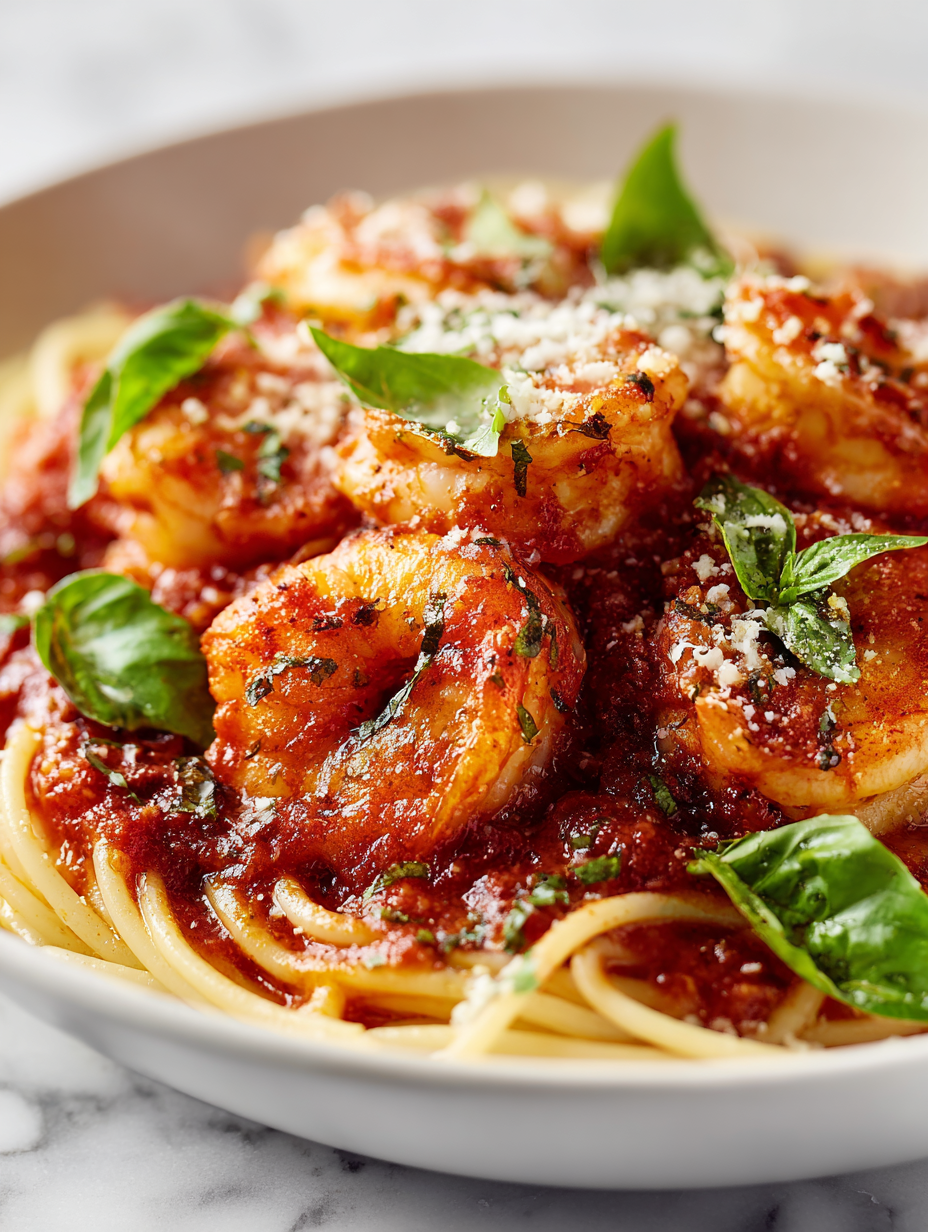
Shrimp Marinara
Ingredients
Equipment
Method
- Start by heating two tablespoons of olive oil in a large skillet over medium heat. Once shimmering, add the minced garlic and cook for about 30 seconds until fragrant, your kitchen filling with a warm, garlicky aroma.
- Pour in the canned crushed tomatoes, stirring to combine with the garlic. Bring the sauce to a gentle simmer and cook uncovered for about 10 minutes, stirring occasionally until it thickens slightly and smells rich and tangy.
- Meanwhile, season the shrimp with a pinch of salt, black pepper, and red pepper flakes. Heat a small splash of olive oil in a separate pan over medium-high heat, then add the shrimp. Cook for 2-3 minutes on each side until they turn pink and opaque, with a slight bounce when pressed.
- Once cooked, transfer the shrimp into the simmering marinara sauce. Gently stir to coat each piece, allowing the flavors to meld for about 2 minutes while the shrimp soak up the saucy goodness.
- Add the lemon juice and lemon zest to the sauce, stirring well to brighten the flavors. Taste and adjust seasoning with additional salt, pepper, or red pepper flakes if desired.
- Just before serving, tear fresh basil leaves and sprinkle them over the sauce for a burst of aroma and color. Give everything a gentle stir to combine.
- Serve the shrimp marinara immediately, spooned over pasta or alongside crusty bread. Enjoy the vibrant, flavorful dish while hot, with the sauce thick and the shrimp perfectly tender.
Pro tips for perfect shrimp marinara
- Bolded mini-head: Use high-quality olive oil—fresh, peppery oil adds depth and aroma to the sauce.
- Bolded mini-head: Sauté garlic just until fragrant—about 30 seconds—avoid burning to prevent bitterness.
- Bolded mini-head: Crush canned tomatoes by hand—this rustic texture develops better flavor and integrates more naturally.
- Bolded mini-head: Cook shrimp quickly—2-3 minutes per side until pink and opaque, to keep them tender and juicy.
- Bolded mini-head: Add lemon juice at the end—brightens the sauce and enhances the seafood flavor without cooking out the zest.
- Bolded mini-head: Rest the dish a minute before serving—allows flavors to meld and shrimp to finish absorbing the sauce.
- Bolded mini-head: Use fresh basil last—torn and added just before plating for maximum aroma and color.
Common mistakes and how to fix them
- FORGOT to check shrimp color—overcooked shrimp turn rubbery. Fix: remove from heat promptly.
- DUMPED all sauce at once—stir gently to prevent breakage. Fix: add sauce gradually while simmering.
- OVER-TORCHED garlic—burns bitter. Fix: lower heat immediately and add a splash of water.
- SKIPPED resting time—shrimp and sauce need to meld. Fix: let sit for 1 minute before serving.
Quick fixes and pantry swaps
- When sauce is too thick, splash in a bit of pasta water to loosen it up.
- If shrimp are rubbery, reduce cooking time and serve immediately once pink.
- Splash a little lemon juice if the sauce tastes dull or flat.
- Patch over-salted sauce with a pinch of sugar or more tomatoes to balance flavors.
- Shield burnt garlic by removing pan from heat and adding a splash of water, then restart.
Prep, store, and reheat tips
- Prep the sauce: Make the marinara up to two days in advance. Let it cool completely, then store in an airtight container in the fridge. Reheat until bubbling and fragrant, about 5 minutes over medium heat, smelling smoky and garlic-rich.
- Prepare the shrimp: Peel and devein the shrimp ahead of time. Keep covered in the fridge for up to 24 hours. Rinse lightly before cooking to remove any brine or smell of raw seafood.
- Storage shelf life: Both sauce and cooked shrimp stay good in the fridge for up to 2 days. Frozen marinara can last up to 1 month; thaw overnight in the fridge before reheating.
- Reheating tips: Gently reheat the sauce in a skillet over medium-low heat, stirring occasionally. When hot, add the shrimp last, cooking just until warmed through, ensuring they don’t overcook and turn rubbery. Expect a fragrant aroma of garlic and tomato, with a slight shimmer of oil on the surface.
Top questions about shrimp marinara
1. Can I use frozen shrimp?
Use fresh, deveined shrimp with tails on for the best flavor and presentation. They soak up the sauce nicely and look appealing when served.
2. Can I prepare the shrimp ahead of time?
Yes, but thaw them completely in the fridge overnight and pat dry to avoid excess water in the pan, which can make the sauce watery.
3. How do I know when shrimp are cooked?
Cook the shrimp just until they turn pink and opaque, about 2-3 minutes per side, to prevent rubberiness. They should be plump and slightly firm.
4. How thick should the sauce be?
Simmer the tomato sauce for about 10 minutes until it thickens slightly and smells bright and garlicky. It should be bubbling gently around the edges.
5. When should I add lemon juice?
Add lemon juice at the end of cooking to brighten the flavors and give a fresh, tangy contrast to the rich tomato and seafood.
6. Can I skip the olive oil?
Use high-quality olive oil for sautéing garlic and shrimp. It adds depth and a fruity aroma that elevates the dish’s overall flavor.
7. How do I fix overly acidic sauce?
If the sauce is too acidic, stir in a pinch of sugar or honey to balance the tang and round out the flavors.
8. Can I substitute dried basil?
Fresh basil added just before serving provides a vibrant aroma and peppery brightness, making the dish feel lively and fresh.
9. How do I reheat leftovers?
Reheat the sauce gently over medium-low heat, stirring often, until steaming and fragrant. Add shrimp at the end to warm through without overcooking.
10. How can I make it spicier?
For a spicy kick, add sliced fresh chili or red pepper flakes during simmering. Adjust to your heat preference, tasting as you go.
This shrimp marinara feels like a quiet victory—simple ingredients, bold flavors, and a touch of nostalgia. It’s a dish that reminds me how a well-made sauce can turn an ordinary moment into something memorable.
Whenever I make this, I’m struck by how comforting and fresh it tastes, especially with that burst of lemon and fragrant basil. It’s one of those recipes that’s good for any day, no fuss, just honest, hearty food that hits all the right notes.